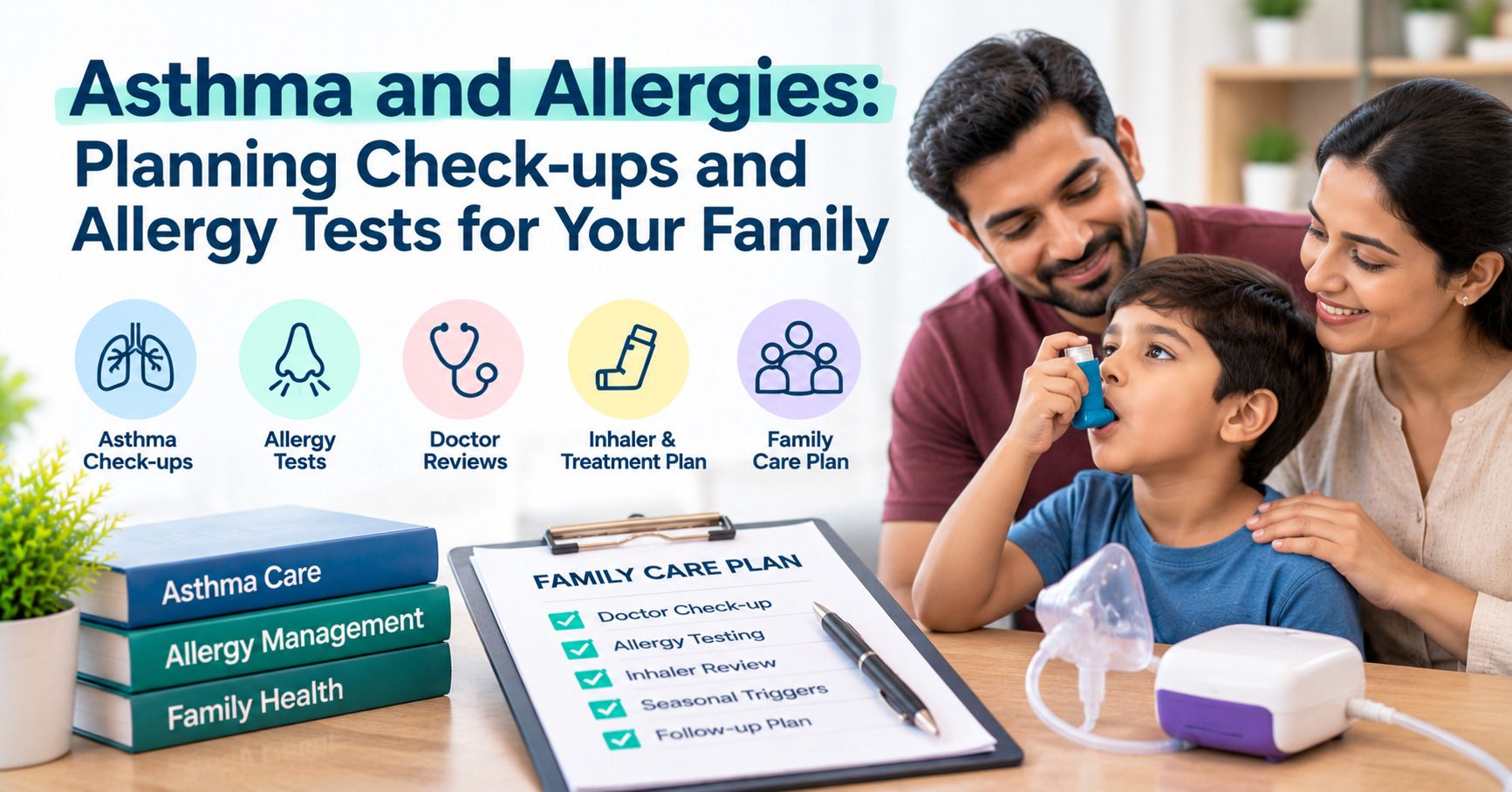
Sneezing at dawn, a cough that never quite leaves, a whistle in the chest after a game of cricket, and the usual dust trouble every October? Here is how Indian families can tell allergies from asthma, understand the risks, and plan smart check-ups before the next dusty, damp or smoggy season arrives.
It usually begins quietly: a child clears her throat all night, a father blames the “weather” for yet another sneezing fit, a grandmother tightens her shawl because “the dust has started again”. Nobody panics, until a few weeks later, someone is wheezing on the staircase, and the whole house wonders what went wrong.
Allergies and asthma often arrive together, and because many symptoms look like normal cold, they can slip past a busy family for months. We’ll help you understand the difference between asthma and allergic asthma, how both are linked and is allergic asthma dangerous. Let’s get started.
Allergy and Asthma: Why They So Often Travel Together
Asthma is one of the most common long-term conditions in the world. According to estimates from the World Health Organization (WHO), asthma has affected 363 million people in 2023 and caused 442,000 deaths. It is also the most common chronic disease among children.
Allergies are never far behind. WHO says that asthma is more likely in people who already have other allergic conditions, such as eczema and hay fever. As per a 2025 study by researchers at the US Centers for Disease Control and Prevention (CDC), 82.1% of people with asthma also had allergy symptoms. Among adults with asthma, those with allergy symptoms were more likely to have had an asthma attack in the previous year. The takeaway was simple. If you treat asthma, look for allergies too.
Think of your airways as one long corridor that runs from the nose to the lungs. When an allergen irritates one end, the other end often reacts too. That is why doctors increasingly look at allergy and asthma as a pair rather than two unrelated problems.
Difference Between Asthma and Allergic Asthma
Many families use “asthma” and “allergic asthma” as if they meant the same thing. While they overlap, they are not identical.
Asthma is the umbrella term. The small airways in the lungs become inflamed and narrow, which causes cough, wheeze, breathlessness and chest tightness. Triggers differ from person to person and include cold air, exercise, strong emotions, colds, smoke and fumes.
Allergic asthma is asthma in which allergens are the main trigger. When a sensitised person breathes in house dust mites, pollen, moulds or animal fur and feathers, the immune system overreacts and the airways tighten.
Respiratory allergies, such as hay fever, mostly stay above the neck: sneezing, a runny nose, itchy and watery eyes.
| Feature | Asthma (general) | Allergic asthma | Respiratory allergy |
|---|---|---|---|
| What is affected | Airways in the lungs | Airways in the lungs, with an allergic trigger | Nose, eyes and throat |
| Typical symptoms | Cough, wheeze, breathlessness, chest tightness | Same asthma symptoms, often after contact with dust, pollen, mould or pets | Sneezing, runny or blocked nose, itchy and watery eyes |
| Common triggers | Cold air, exercise, smoke, infections, emotions | Dust mites, pollen, moulds, animal fur and feathers | Similar airborne allergens |
| Best first step | Doctor review and breathing (lung function) test | Doctor review plus allergy testing | Doctor review; testing if symptoms persist |
You can have one, two or all three. You can also have asthma with no allergy at all. In short, guessing is a bad plan and testing is a good one.
Signs of Respiratory Allergies and Asthama: What to Watch For
Not every sneeze is a warning, and not every cough is asthma. But certain patterns deserve a doctor’s attention:
- Sneezing, a runny nose or itchy, watery eyes that return every season or last all year, which is typical of respiratory allergies
- Cough that worsens at night or after exercise
- Wheezing, a whistling sound when breathing out
- Breathlessness or chest tightness, sometimes even at rest
- Flare-ups during dusting, in damp rooms, near pets or in smoky air
WHO points out that asthma symptoms are often worse at night or during exercise, and that the same symptoms can come from other conditions, so self-diagnosis is risky. Children may not say they are breathless at all. A child who coughs through the night or tires quickly while playing may be telling you something.
Is Allergic Asthma Dangerous?
The honest answer: it can be, but it does not have to be.
Most people with allergic asthma lead normal, active lives when the condition is diagnosed and treated well. WHO says inhaled medicines can control symptoms and allow a normal, active life, yet in the most severe cases asthma can lead to death.
The real danger lies in not knowing. India’s numbers show why. Global Burden of Disease 2019 data, analysed in Lung India, show that India has about 12.9% of the world’s asthma cases (roughly 34.3 million people) but nearly 42% of global asthma deaths. And this gap is linked to the under-use of inhaled corticosteroids, the preventive medicines that calm airway inflammation. Another analysis of Indian data shared by the Global Asthma Network suggests that only about one in four people with asthma receives a formal diagnosis.
In other words, the risk is highest when asthma goes unrecognised, is dismissed as a “recurring cold”, or is treated only with quick-relief medicine after each flare-up.
Seek emergency help immediately if someone: call 112 or go to the nearest emergency department if someone:
- finds it hard to speak a full sentence because of breathlessness
- has blue or grey lips or fingertips
- gets no relief from the reliever inhaler, or is getting rapidly worse.
- becomes drowsy, confused, or unusually hard to wake
- is a child and the skin pulls in between the ribs or at the neck while breathing
Planning Check-ups: A Family Roadmap
A family health plan works best when it is simple and specific. Use this table as a starting point and adapt it with your doctor.
| Who | Why a check-up helps | What to plan |
|---|---|---|
| Children with night cough, eczema or hay fever | Eczema and hay fever make asthma more likely. | Pediatrician visit; ask whether a lung check and allergy testing suit your child’s age |
| Adults with year-round sneezing or breathlessness | Most adults with asthma also report allergy symptoms. | Review with a physician or chest specialist; discuss breathing tests and allergy testing |
| Anyone with a parent or sibling who has asthma | Family history raises the likelihood of asthma. | Share family history at every visit; ask how often to be reviewed |
| People already using inhalers | Control can shift with seasons, infections and pollution. | Follow-up as advised; refresh the asthma action plan; check inhaler technique |
| Older family members | Breathlessness has many causes, not only age. | Get a proper evaluation instead of assuming it is “just age” |
Before you walk into the clinic:
- Keep a two-week symptom diary: when symptoms occur, where you were and what you were doing
- Note your triggers: dust, damp walls, pets, pollen season, crackers, winter smog
- Carry every medicine and inhaler, including over-the-counter antihistamines
- Record a short video of a child’s wheeze or night cough if you can
- Time it smartly: WHO lists cold air, weather change, moulds and air pollution among triggers, so a review before monsoon and before winter is a sensible habit
Allergy Tests Explained: What Your Family Can Expect
Allergy testing identifies what your immune system is reacting to. Two methods are used most often.
Skin prick test. In this, a drop of allergen extract is placed on the skin, which is then pricked lightly with a small pin. A raised, itchy bump suggests sensitivity. It is a safe, quick test done by trained staff. Antihistamines interfere with the result, and are usually stopped a few days before the test; your clinic will tell you exactly. Please never stop any medicine, prescribed or over the counter, without checking with your doctor.
Specific IgE blood test. In this test, a blood sample is sent to a laboratory to measure allergy antibodies to particular allergens. It is useful when skin testing is not practical, for example with severe eczema or recent antihistamine use.
Sometimes neither test gives a clear answer, and the doctor may suggest further steps. Remember that a result shows sensitisation, not a final verdict. Your doctor reads it alongside your symptoms and history. Asthma itself is confirmed through clinical assessment and breathing tests such as spirometry or peak flow.
Simple Home Steps That Make a Big Difference
- Tackle dust mites: wash bedsheets in hot water every week and dry mattresses and pillows in the sun
- Fix the damp: seepage and bathroom dampness invite mould, especially in the monsoon
- Keep pets out of bedrooms if animal fur is a trigger
- Avoid smoke: WHO stresses that reducing tobacco smoke exposure helps prevent asthma and control it; incense and mosquito-coil smoke can also irritate sensitive airways
- Use inhalers correctly: WHO notes that a spacer makes aerosol inhalers easier to use, especially for children
- Ask for an asthma action plan, a written guide that tells you what to do when symptoms worsen
What This Costs in OPD and How Prime Care Fits In
Hospital bills make the headlines. For conditions like asthma and allergies, it is the everyday OPD spending that adds up: consultations, tests, inhalers and medicines, repeated for months. The data agrees:
- Households still carry a big share. The Union Health Ministry’s National Health Accounts put out-of-pocket spending at 43.4% of India’s total health expenditure in 2022-23.
- Medicines dominate outpatient bills. A JAMA Network Open study of national survey data found medicines made up 60.3% of outpatient out-of-pocket spending, and yearly outpatient costs took roughly 22% of average household income, against 15.6% for inpatient care.
- Outpatient care often sits outside insurance. A recent policy review notes that outpatient services lie largely outside India’s flagship hospitalisation insurance scheme.
So what can you do? Three things, none of them complicated.
- Read your policy wording. In many health insurance plans OPD cover is not automatic; it may be an add-on or a separate plan, with its own limits.
- Track a year of your family’s consultations, tests and medicines, so you know your real number.
- Compare plans against that number, not against a brochure.
We built Prime Care for the everyday layer of healthcare, the consultations, tests and follow-ups that fill most of a family’s year. With any of our OPD plan, you get a cashless wallet that you can use and pay directly at any of our partner clinics, labs, and pharmacies.
With our unlimited teleconsultation services, you can talk to a doctor from home anytime, anywhere. We also help you stay on track with habit coaching and wellness sessions.
Your family’s next easy breath starts here. See how our OPD care options fit your situation.
Frequently Asked Questions
What is the difference between asthma and allergic asthma?
Asthma is the broad condition of inflamed, narrowed airways. Allergic asthma is the type where allergens like dust mites, pollen, moulds or animal fur trigger symptoms. Some people have asthma without any allergic trigger, so assessment and allergy testing help.
Is allergic asthma dangerous?
It can be if it is missed or poorly controlled, and WHO notes that severe asthma can be fatal. With diagnosis, preventive treatment and an action plan, most people stay active. Seek emergency help for severe breathlessness or if the reliever inhaler isn’t working.
Can respiratory allergies lead to asthma?
Not always, but the link is strong. WHO says asthma is likelier in people with eczema or hay fever, and CDC-led data show most people with asthma also have allergy symptoms. If allergy breathing problems keep returning, ask a doctor to check your lungs.
Does health insurance cover allergy tests and OPD visits?
It depends on your policy. Many plans are built around hospitalisation, and OPD cover may be an add-on or separate. Check the policy wording for consultations, diagnostic tests and medicines, and ask your insurer about limits and waiting periods.
How should we prepare for an allergy test?
Tell your doctor about every medicine you take. Antihistamines can affect skin prick results, but only stop any medicine if your doctor says so. If a skin test isn’t suitable, a specific IgE blood test can be used instead.