One question that must be asked to every HR leader in India is: your group mediclaim policy may be working perfectly, and your employees may still feel unsupported. Why? And that’s because insurance wakes up only when someone is admitted to hospital. Things that don’t usually count as an emergency — a fever, a sugar test, a sleepless night, a stubborn back pain — come up frequently, and employees see a doctor and pay for it themselves.
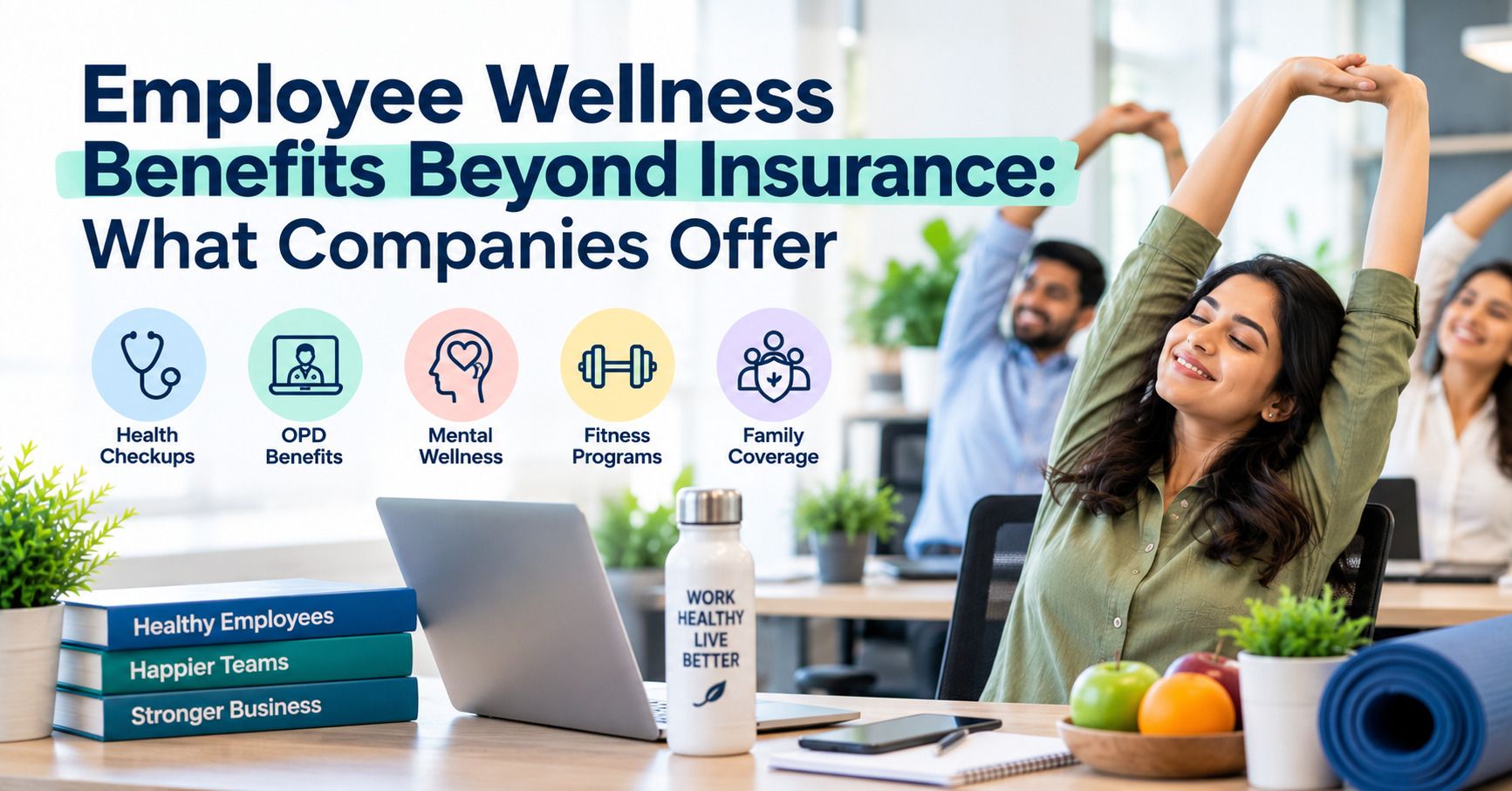
Fortunately, times are changing. It’s 2026, and employers are stepping well beyond insurance with a wellness stack that includes a corporate health checkup, an OPD benefit, and a solid set of group health care plans. Let’s understand why it’s designed and why it works.
Your Insurance Card Is Only Half the Story and It Is No Longer Enough
Group health insurance is brilliant at one job: hospital bills. Surgery, an ICU stay, a planned admission. It’s far less helpful for the everyday stuff, where most of us spend.
The numbers say as much. Indian households still carry a heavy share of the healthcare bill. According to the Union Health Ministry’s latst National Health Accounts, covering 2022-23 and released in May 2026, out-of-pocket spending made up 43.4% of total health expenditure. The same report finds that preventive care accounts for only 8.88% of current health spending, while inpatient and outpatient curative care together take over 56%. As a country, we’re still much better at paying for illness than preventing it.
Illness is knocking and the disease pattern explains why prevention matters. As per the ICMR-INDIAB study, published in The Lancet Diabetes & Endocrinology, 101 million Indians are suffering from diabetes, 136 million with prediabetes and 315 million with hypertension. Many of these conditions stay silent for years, which is precisely what timely screening can catch.
Insurance cover has expanded too. IRDAI’s Annual Report 2024-25 shows health insurers covering about 58.2 crore lives, with health premiums of ₹1,17,505 crore. But being “covered” and being “looked after” are two different things. Hospitalisation cover does not pay for the consultation, the blood test or the prescription that could have prevented the admission. That is the gap beyond-insurance benefits fill.
1. Corporate Health Checkup: Free Doesn’t Mean Pointless
Corporate health checkups have evolved from a yearly formality into the most visible wellness perk on offer. Modern programmes typically include:
- Age- and gender-specific panels covering cardiac, diabetes, thyroid and women’s health screens
- Home sample collection, or on-site camps for large offices and plants
- A doctor consultation to explain results, not just a PDF report
- Follow-up pathways for employees flagged as high risk
Do this to make it count:
- Follow the fasting instructions that come with your booking, so results are reliable
- Carry old reports and a list of any medicines you take
- Mention family history. A parent with diabetes or heart disease changes what a doctor looks for
- Book the doctor consultation, not just the tests
- Put the follow-up date in your calendar before you leave
If you’re an employer, to make the programme work, keep scheduling flexible, extend it to dependants where budgets allow, and guarantee that individual reports stay confidential between the employee and the doctor. Trust drives participation.
Pro tip: pair the checkup with a health risk assessment, then use anonymised, aggregate results to plan your wellness calendar.
2. OPD Benefit: Perk Employees Use Every Month
Most employees never file a hospitalisation claim in a given year, but nearly all of them will visit a doctor, buy medicines or take a test. An OPD benefit covers these outpatient costs, and that is why it scores so high on perceived value. Companies usually structure it in one of three ways:
- OPD cover within the group policy, with a defined annual limit
- An OPD wallet or fixed allowance, used cashlessly for consultations, diagnostics and pharmacy
- Teleconsultation-led programmes, offering doctor access from anywhere, often with family inclusion
Take Meera for example, who has had a nagging cough for two weeks. Without an OPD benefit, she pays for the clinic visit, the chest X-ray and the medicines, then forgets the reimbursement form. With one, she has a video consultation that evening, gets her tests booked and her medicines delivered, and pays nothing upfront. See how Prime.care structures OPD benefit plans.
Ask HR these questions:
- What is my yearly limit, and when does it reset?
- Are my spouse, children or parents included?
- Is it cashless, or do I pay first and claim later?
- What’s covered: consultations, tests, pharmacy, dental, vision?
- Are there sub-limits per visit or per category?
3. Group Health Care Plans: Still the Foundation, Now Smarter
Hospital cover remains the safety net, and rightly so. What has changed is the quality of design. Well-built group health care plans offer:
- Cover for parents and in-laws, alongside spouse and children
- Maternity and newborn benefits
- Mental illness cover, which insurers must provide on par with physical illness under the Mental Healthcare Act, 2017, Section 21(4)
- Top-up and super top-up options for higher-value claims
- Digital onboarding, e-cards and easy cashless access
One more thing worth remembering: group cover usually ends when you leave the job. But a personal policy travels with you.
4. Mental Health and Emotional Wellbeing: Benefit People Forget to Use
Burnout is a business issue, not a personal failing. According to the World Health Organization, an estimated 15% of working-age adults live with a mental disorder, and 12 billion working days are lost every year to depression and anxiety, costing the global economy US$ 1 trillion annually in lost productivity
Mental health support also reduces the stigma that keeps people silent. When an employer normalises conversations about stress, employees seek help earlier, and early help is almost always simpler and cheaper. Many employers now offer free confidential counselling sessions through employee assistance programmes (EAPs). WHO’s workplace guidelines specifically recommend training managers to prevent stressful work environments and support employees in distress.
5. Other Wellness Perks Gaining Ground
Beyond the big three, companies are experimenting with smaller, high-impact additions that make employees feel seen:
- Women’s health programmes for maternity, PCOS and menopause support
- Chronic-care management for diabetes and hypertension, with regular monitoring
- Fitness and nutrition support through gym access, yoga or diet consultations
- Vaccination drives and health camps run on-site
- Teleconsultations with doctors across specialities
How to Build Your Wellness Stack in 5 Steps (For Employers)
- Listen first. Run a short employee survey on health needs, age mix and gaps.
- Layer your benefits. Start with group health care plans, then add OPD and a yearly corporate health checkup.
- Pick one partner. Fewer vendors mean fewer logins, faster support and cleaner reporting.
- Communicate loudly. A benefit nobody understands is a benefit nobody uses.
- Measure and refine. Track utilisation, screening uptake and feedback, then adjust yearly.
| Benefit | What it solves | How often employees use it |
|---|---|---|
| Group health care plans | Hospitalisation and surgery costs | Occasionally, but vital |
| OPD benefit | Doctor visits, tests and medicines | Several times a year |
| Corporate health checkup | Early detection of silent conditions | Once a year |
| Mental health support | Stress, anxiety and burnout | As needed, year-round |
How Prime.care Helps You Go Beyond Insurance
Insurance protects your people when things go wrong; wellness benefits keep things from going wrong in the first place. Employers who invest in both build trust, reduce avoidable sick days and show employees that their health matters long before a crisis.
At Prime.care, we believe healthcare benefits should be easy to understand and even easier to use. We help HR and finance teams bring preventive care and outpatient benefits together in one thoughtfully designed OPD programme.
Check out our OPD coverage fine print and get your coverage!
Frequently Asked Questions
What are employee wellness benefits beyond insurance?
They are health and wellbeing perks that supplement hospitalisation cover, such as corporate health checkups, OPD benefits, mental health support, chronic-care programmes, fitness offerings and teleconsultations.
How is an OPD benefit different from group health insurance?
Group health insurance mainly pays for hospital admissions. An OPD benefit covers outpatient expenses such as doctor visits, diagnostics and pharmacy bills, which employees face far more often.
Is a corporate health checkup tax-deductible?
Employees under the old tax regime can claim up to ₹5,000 for preventive health check-ups within the overall Section 80D limit.4 The new tax regime does not allow this deduction. Please confirm with your chartered accountant.
Are group health care plans mandatory for employers in India?
There is no blanket law requiring every private employer to buy group health insurance, though statutory schemes such as ESI apply to eligible establishments. Check with your legal or compliance adviser for your situation.
Is a corporate health checkup really free?
Employers often fund it, but the scope varies. Some cover only a basic panel. Ask which tests are included and whether family members can join.