You would never feel cheated by a hospital bill that insurance has paid. Unfortunately, the sting comes later, at the neighbourhood pharmacy, when the very same policy suddenly goes quiet. Think of this: you are at the pharmacy counter, the bill for five medicines reads ₹3,860, and you doubt, isn’t this what my health insurance is for?
According to the Health Ministry’s latest National Health Accounts, Indian households still paid 43.4% of all health spending themselves in 2022–23, and medicines consistently make up the biggest share of the outpatient bill. Your insurance was built for the big, scary events. Your pocket handles the small, repeat ones: the BP tablets, the child’s cough syrup, the follow-up consultation.
So, does health insurance cover medicine costs? And exactly when and how prescription drug coverage insurance works in India? Yes, but only in specific situations. Here is when it pays, and when it doesn’t.
Does Health Insurance Cover Medicine Cost? The Situations That Matter
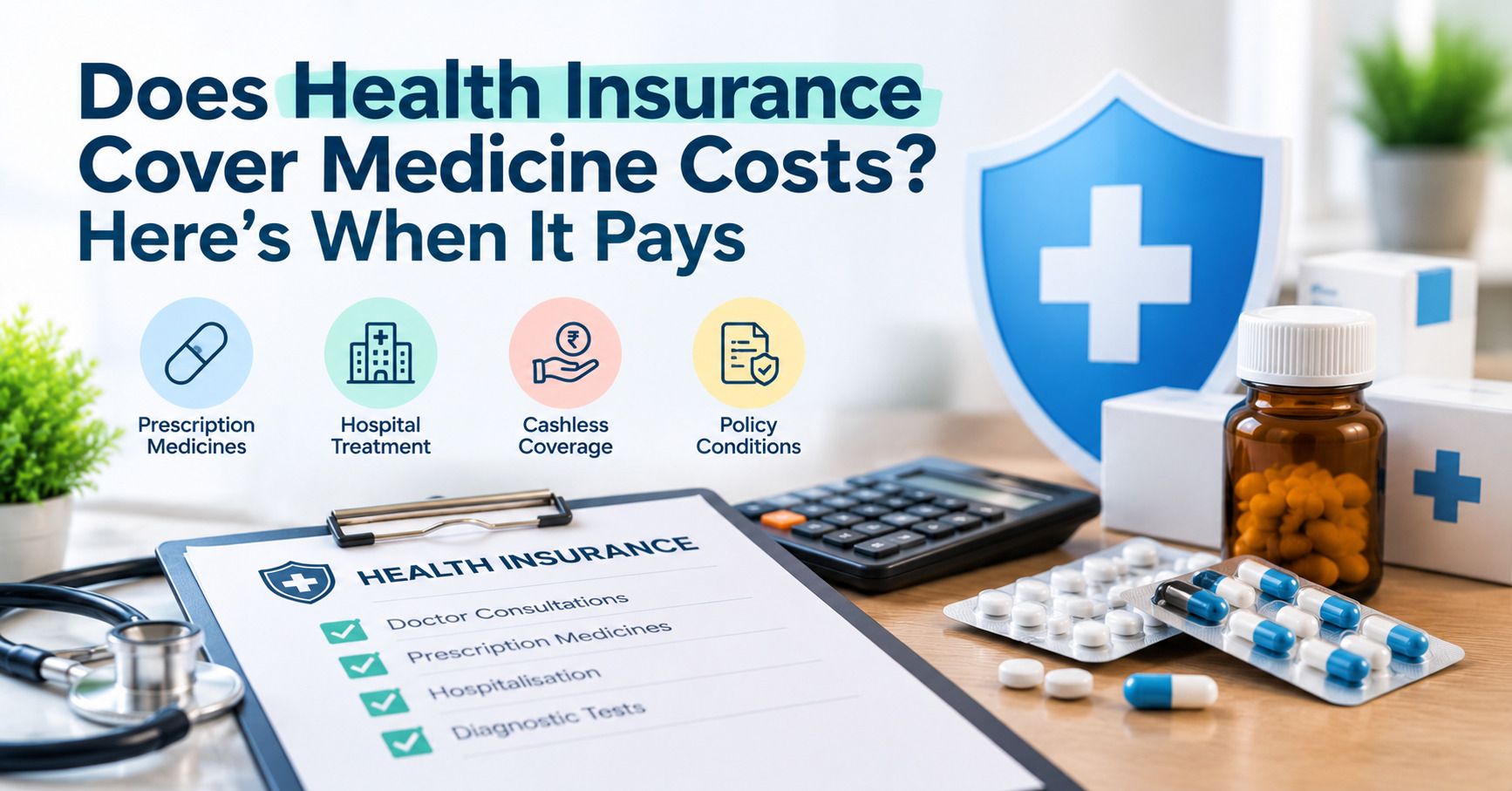
In short, yes, medicines are covered under health insurance but only when they are part of a hospital admission, a day-care procedure, or the pre- and post-hospital window in your policy. Everyday prescriptions from a doctor’s clinic (OPD) usually are not covered, unless your plan includes an OPD benefit.
Most Indian health policies are built around hospitalisation. Since the IRDAI Master Circular on Health Insurance Business of 29 May 2024, insurers use standardised definitions for terms such as day care and pre- and post-hospitalisation, so policy language is more uniform. Here is how medicines fit in.
| Where the medicine is used | Usually covered? | What to know |
|---|---|---|
| During a hospital stay | Yes | Part of the claim, within your sum insured and sub-limits. |
| Day-care procedures such as dialysis or chemotherapy | Yes, if listed | Check the day-care list in your policy wording. |
| Before admission (pre-hospitalisation) | Yes, within a window | Must relate to the same illness; the number of days varies by plan. |
| After discharge (post-hospitalisation) | Yes, within a window | Commonly 60 days, and 90 in some plans. |
| Routine OPD prescriptions (fever, BP, diabetes refills) | Usually no | Needs an OPD add-on or built-in OPD benefit. |
| Vitamins, supplements and over-the-counter products | Rarely | Typically excluded. |
Prescription Drug Coverage Insurance in India: How It Really Works
Sadly, if you search for “best prescription drug insurance plan”, you will mostly land on American plans such as Medicare Part D. India has no standalone, drug-only national plan. Medicine cover reaches you through four routes instead:
- Base health policy: pays for medicines linked to hospitalisation, including the pre- and post-hospitalisation window.
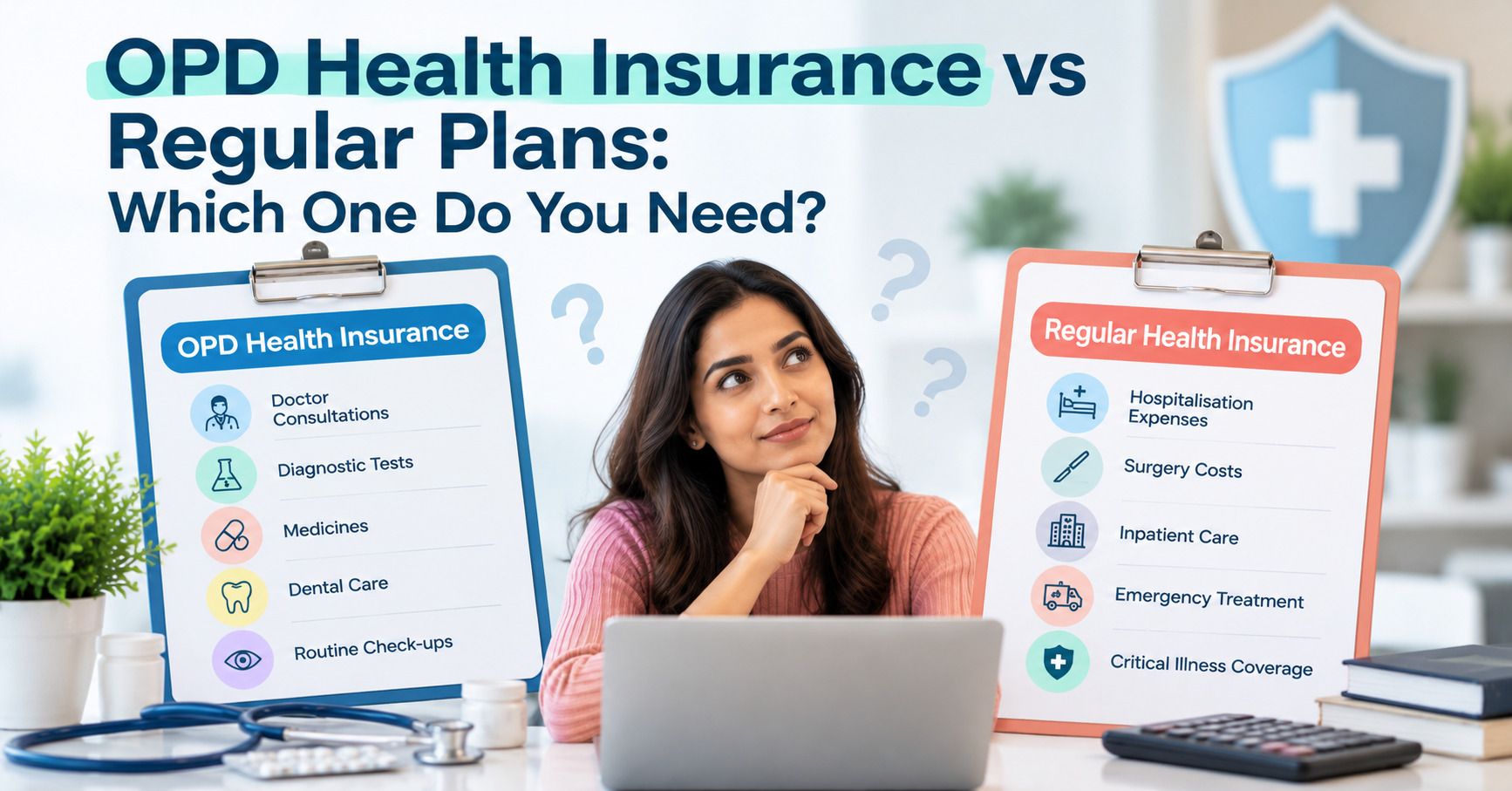
- OPD add-on or built-in outpatient benefit: pays for consultations, tests and pharmacy bills up to an annual limit.
- Employer group cover: check whether OPD and pharmacy expenses are included, and what happens if you change jobs.
- Government schemes: Ayushman Bharat PM-JAY covers hospital care for eligible families, not everyday prescriptions.
Also Read: Does Health Insurance Cover OPD Expenses in India?
Why Medicine Costs Deserve Coverage
The numbers explain the worry. Out-of-pocket spending fell from 64.2% of total health expenditure in 2013–14 to 43.4% in 2022–23, yet it was higher than the 39.4% recorded in 2021–22, a year when pandemic-related government spending was unusually high. Meanwhile, private health insurance has nearly tripled its share, from 3.4% to 9.2%. More families are insured, but the pharmacy counter is still where many pay directly.
Research drawing on the National Sample Survey’s 75th round found medicines accounting for about 70% of out-of-pocket spending on non-hospitalised care. However, the authors caution that household surveys can overstate this share. Either way, everyday medicines are where budgets quietly leak.
Health Insurance Coverage for Prescription Drugs: Read the Fine Print
Even when medicines are payable, these details can reduce what you get back:
- Pre- and post-hospitalisation windows. Many plans cover about 30 days before admission and 60 days after discharge; some offer 60 and 90 days.
- The same-condition rule. Medicines must relate to the illness that led to the admission.
- Waiting periods. Conditions you already have may face a waiting period before related claims are paid.
- Sub-limits and co-payment. A cap on a category, or a share you pay yourself, shrinks the payout.
- Non-payable items. Certain consumables and non-medical items are excluded unless your policy adds them back.
- Paperwork. Keep prescriptions, bills and discharge summaries together.
Family Prescription Drug Insurance Plans Only? A Smarter Way to Think
Families often ask us for “family prescription drug insurance plans only”, meaning one pot of money for everyone’s medicines. In India, the closest you will get is a family floater with an OPD benefit, an OPD-focused plan such as those offered byPrime Care, or employer cover with outpatient benefits.
One good news on price is that, since 22 September 2025, individual health insurance policies, including family floater plans, are exempt from GST, which used to be 18%. Parents aged 70 or above can get ₹5 lakh of hospital cover a year through the Ayushman Vay Vandana card, regardless of family income.
How to Pick the Best Prescription Drug Insurance Plan: A 7-Point Checklist
Though there is no single medicine cover policy in India, you can use this checklist before you choose any other health plan for yourself:
- Add up your real spend. Total twelve months of pharmacy bills first.
- Check limits. Look at OPD and sub-limits, per person and per family.
- Look for cashless access. Confirm whether pharmacy bills are cashless or reimbursement-only.
- Compare hospitalisation windows. Count the pre- and post-hospitalisation days.
- Understand waiting periods and co-pay for chronic conditions such as diabetes or hypertension.
- Ask about claim speed. IRDAI expects cashless authorisation decisions within one hour and final discharge approval within three hours. Data reported for August 2024 to May 2025 showed 86.88% of requests cleared within an hour and 96.69% of final authorisations within three hours.
- Confirm renewability and use the free-look period. Review the premium after the GST exemption and use the 30-day free-look window.
Five Practical Ways to Reduce Medicine Costs, Insured or Not
- Ask your doctor about generics. Over 18,000 Jan Aushadhi Kendras sell 2,110 medicines at prices generally 50–80% lower than comparable branded ones.
- Know the price ceiling. The National Pharmaceutical Pricing Authority (NPPA) fixes ceiling prices for scheduled medicines, and the NLEM 2022 refixation brought an average price reduction of about 16.89%.
- Plan refills for chronic medicines. Ask your doctor whether a longer supply suits you.
- Keep a medicine file. Prescriptions, bills and reports speed up claims.
- Compare before you refill. Check prices across local pharmacies and licensed e-pharmacies before buying chronic medicines.
How Prime Care Helps You Stay in Control of Medicine Costs
At Prime Care, we believe a prescription should never force a family to choose between health and the household budget. Health insurance covers medicine costs when medicines are part of a hospitalisation, and it can when you choose OPD cover wisely. So, choose a solid base policy, the right outpatient benefit and smart pharmacy habits. Start by reading your policy wording today, and let Prime Care help you understand your medicine costs, coverage options, and the next step.
Explore our plans and cover yourself and your family’s pharmacy and medicine needs.
Disclaimer: Insurance is the subject matter of solicitation. Please read the policy wording carefully for details on coverage, exclusions, limits and conditions before buying.
Frequently Asked Questions
Does health insurance cover medicine costs for regular doctor visits?
Usually not. Standard policies pay when you are hospitalised or undergo a listed day-care procedure. Outpatient prescriptions are covered only if your plan includes OPD benefits, or you add an OPD rider. Always check the annual limit.
Is there a health insurance plan that covers only prescription drugs?
India has no nationwide drug-only plan. Some insurers offer OPD-focused covers or add-ons that include pharmacy bills within an annual limit. Read the wording on limits, exclusions and waiting periods before buying.
Are medicines covered after I am discharged from hospital?
Yes, if they relate to the same illness and fall within your policy’s post-hospitalisation period, commonly 60 days and up to 90 days in some plans. Submit prescriptions and bills with your claim.
Do government schemes pay for everyday medicines?
Ayushman Bharat PM-JAY offers up to ₹5 lakh per year for hospitalisation, including for seniors aged 70 and above through the Vay Vandana card. It is not designed for routine OPD prescriptions. For those, Jan Aushadhi Kendras offer lower-priced generics.
What documents do I usually need for a medicine claim?
Commonly, a prescription from a registered doctor, pharmacy bills and any related reports. Insurers differ, so follow your insurer’s claim checklist.