Ask any Indian parent when they last used their health insurance, and they will have to think. Now ask when they last paid a doctor, a chemist, or a lab, and the answer is usually “last week.” No consultation, pharmacy visit, or blood test needs a hospital bed, yet the bills arrive anyway.
We will explain this gap in today’s blog. At Prime Care, we talk to families all the time. The story rarely changes: a solid family floater health insurance policy in the cupboard, and a steady trickle of everyday medical bills paid from the household budget anyway. So let us sort out what a floater really is, what it leaves out, and what a sensible family can do about it.
Family Floater Meaning: What Is a Floater in Health Insurance?
Let us begin with the basics. Floater means shared. Family floater plan refers to a single health insurance policy that covers several family members, typically you, your spouse, dependent children and, in many plans, dependent parents. Any insured member can draw from it when hospitalised, until it runs dry. You pay one premium, hold one policy, and renew it annually.
Everyone you add to the policy floats on the same sum insured. Everyone dips into one common pool, and once it is empty, no cover remains for the others, unless your plan has a restoration benefit (which refills the sum insured) or you hold a top-up.
An individual plan works the other way round. Each person has a separate sum insured and a separate premium. So one family member’s big claim cannot eat into another’s cover.
How it plays out in real life: a quick example
Say the Malhotras buy a ₹10 lakh floater for two adults and two children. In April, Mr Malhotra was hospitalized, and the bill was ₹6 lakh. The policy pays it. For the rest of the year, the whole family now shares the remaining ₹4 lakh. If the younger child needs surgery in November, that is the pool available. That shared pool is both the strength and the limit of a floater.
The premium for a floater is usually calculated around the eldest member’s age. If your parents are on the same policy, the eldest member’s age sets the price for the whole family, so compare quotes with separate policies before you decide.
What a Family Floater Usually Covers, and What It Skips
| Usually covered | Usually not part of the base plan |
|---|---|
| Hospital stays (typically 24 hours or more) | Routine doctor consultations |
| Day-care procedures such as cataract surgery or dialysis | Everyday medicines and pharmacy bills (other than pre- and post-hospitalisation costs) |
| Limited pre- and post-hospitalisation costs | Standalone lab tests and check-ups, unless your plan adds a benefit |
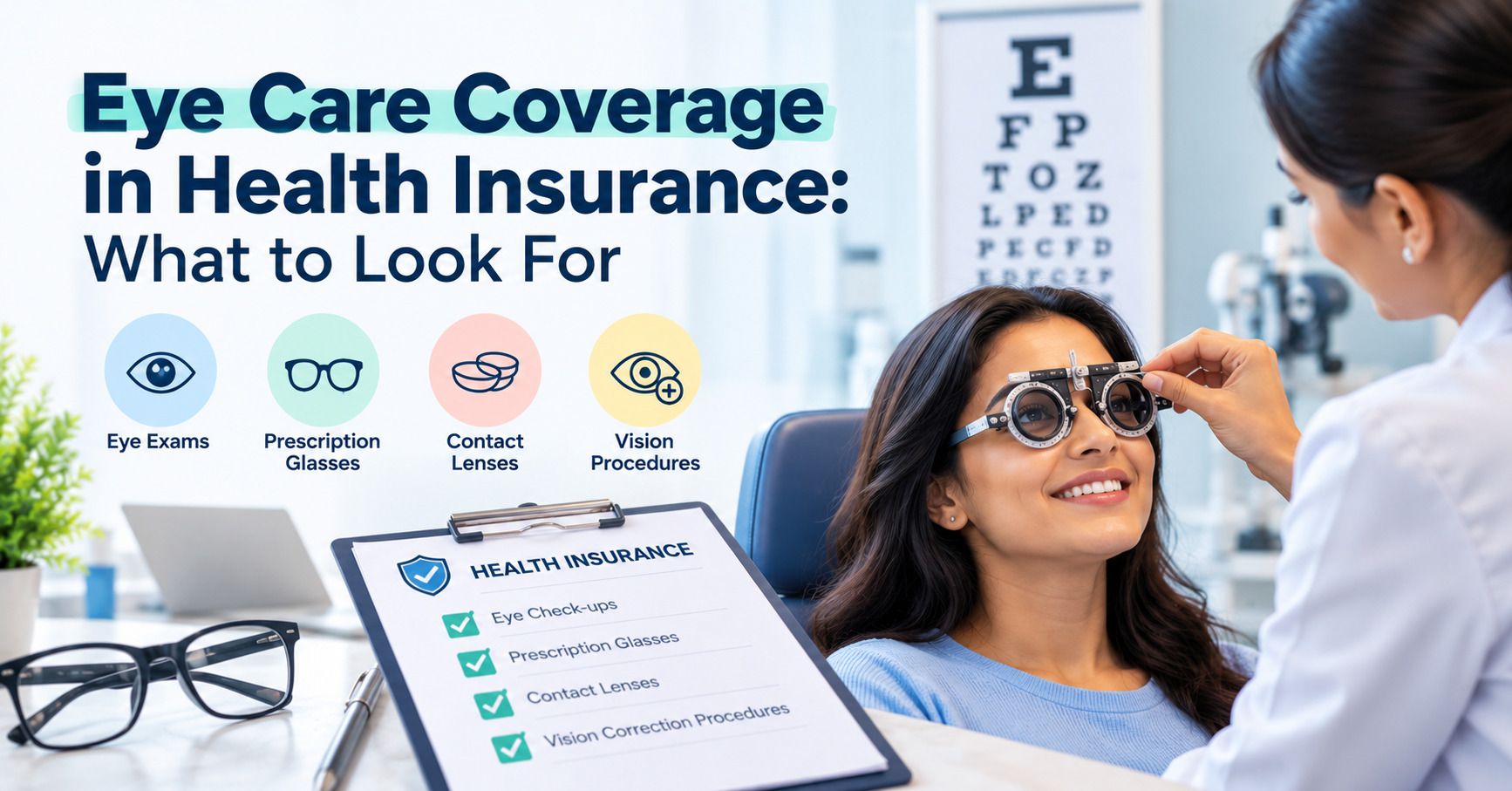
| Cashless treatment at network hospitals | Routine dental and eye care |
Plans differ, so your policy terms always have the final say. Here is the pattern, though: a floater is built to rescue you from the large, rare bill. It was never meant to track the small, regular ones.
Under IRDAI’s Master Circular on Health Insurance Business of 29 May 2024 (ref. IRDAI/HLT/CIR/PRO/84/5/2024), insurers are required to decide cashless requests within one hour and give final discharge authorisation within three hours of the hospital’s request, in force from 1 August 2024. It does not add everyday care to a plan that does not include it.
Key Benefits of Family Floater Health Insurance
- Value for money: one floater premium is often lower than buying separate individual policies for each member. The exact premium depends on the eldest member’s age, city, and cover.
- Simple to manage: one policy document, one renewal date, one point of contact.
- Flexible usage: whoever needs the cover most can use it.
Where a Floater Falls Short: The Everyday Care Gap
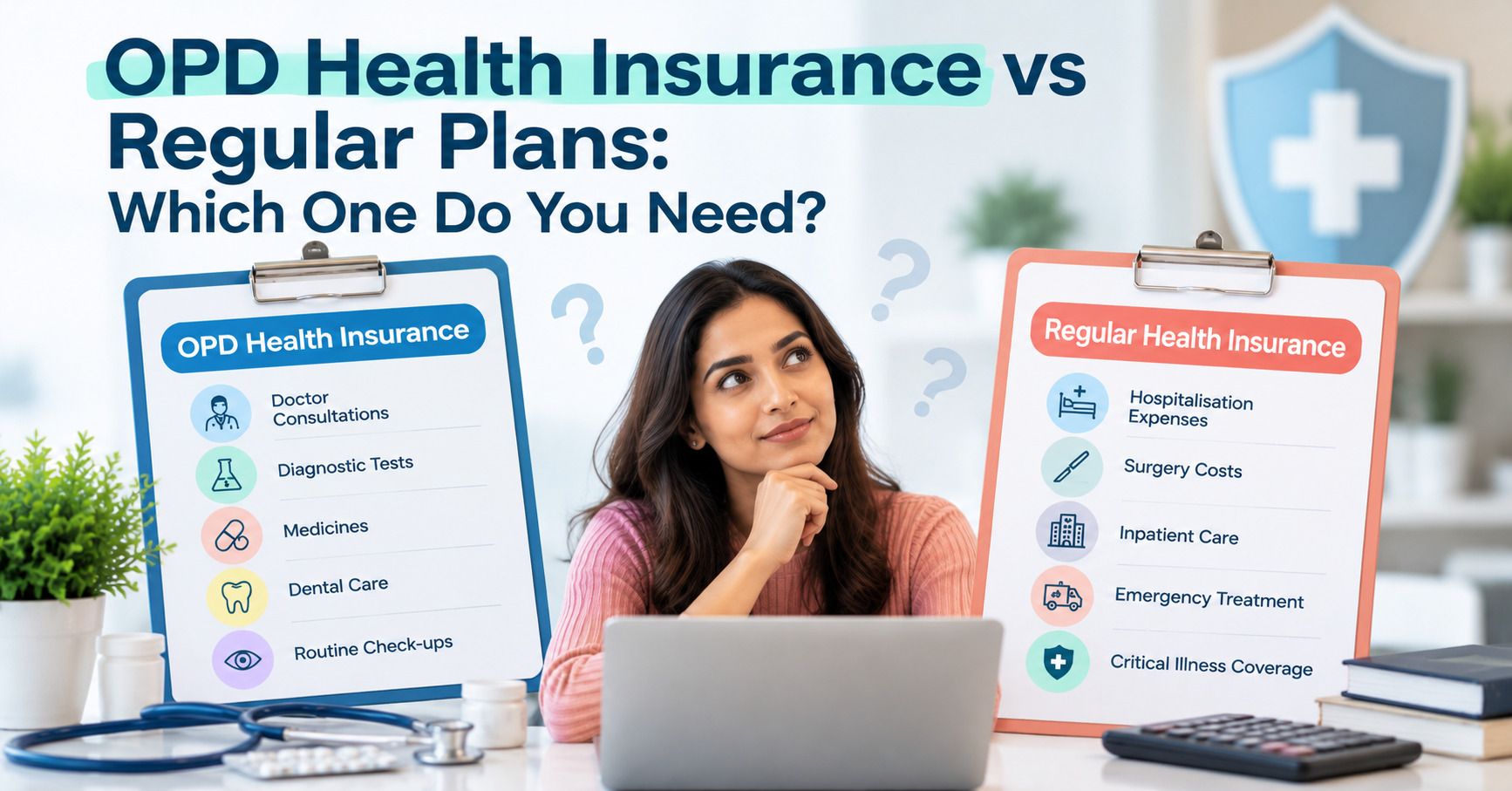
Family floater plans are designed around hospitalisation: inpatient stays, day-care procedures, and usually limited pre- and post-hospitalisation costs. Routine outpatient (OPD) spending is typically not part of the base cover unless your plan specifically adds it.
Here is a year in the life of a made-up but very familiar family: two working parents, a school-going child and a grandparent on regular medication. Since these figures are illustrative, swap on your own.
| Expense | Typical amount (illustrative) | Claimable from a base floater? |
|---|---|---|
| Paediatrician visit | ₹600 a visit, about 6 visits a year (₹3600) | Usually no |
| BP and thyroid medicines | ₹1,400 a month (₹16,800) | Usually no |
| Blood sugar and thyroid tests | ₹1,200 a quarter (₹4,800) | Usually no |
| Dental check-up | ₹800 twice a year (₹1,600) | Usually no |
| Eye test and glasses | ₹2,500 a year on average (glasses every couple of years) | Usually no |
| Total | About ₹29,300 a year | ₹0 |
None of these bills looks scary on its own. Together, they quietly add up to a sizeable annual cost that no policy claim ever sees.
Also, a floater has built-in limits. One large claim can drain the shared sum insured, and features such as waiting periods, co-payments and room-rent limits can reduce what you finally receive.
Meanwhile, everyday care adds up. According to the National Health Accounts estimates released by the Ministry of Health and Family Welfare, out-of-pocket expenditure accounted for 43.4% of India’s total health expenditure in 2022-23. It means that for every ₹100 spent on health in the country, about ₹43 still comes directly from people’s own pockets.
Enter the Family OPD Wallet
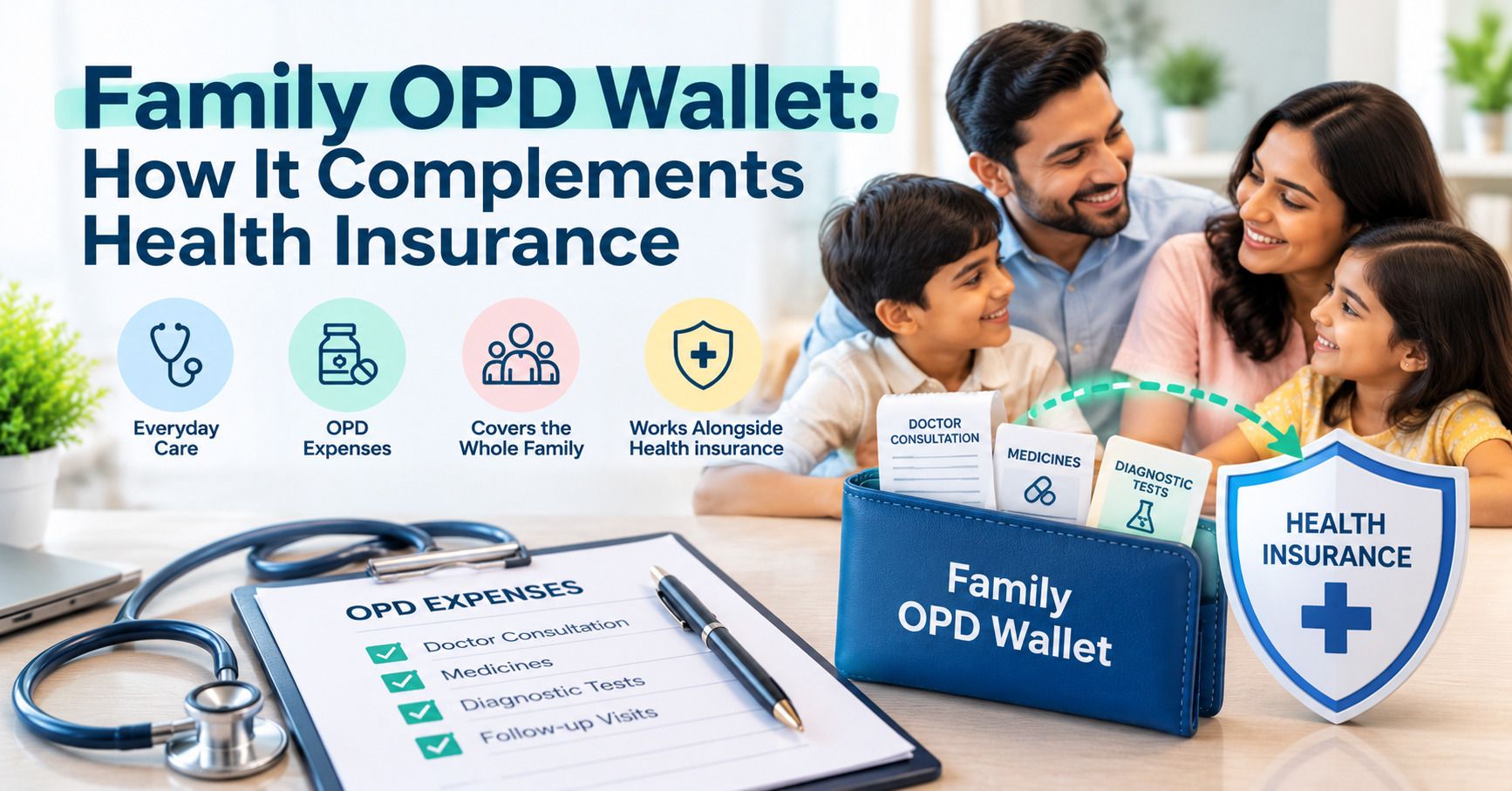
An OPD wallet is a pre-loaded healthcare balance for care that does not need hospital admission. Depending on the plan, that can include doctor consultations, pharmacy purchases, diagnostic tests, and dental or eye care. Family OPD Wallet lets the whole household draw from one shared balance, so you do not have to track a separate limit for every person.
Family Floater vs Family OPD Wallet: Quick Comparison
| Feature | Family Floater | Family OPD Wallet |
|---|---|---|
| What it covers | Hospitalisation and day-care procedures, as per policy | Consultations, medicines, tests and more, as per plan |
| Typical use | Surgery, ICU, accidents, major illness | Regular, predictable, everyday care |
| How it is shared | One shared sum insured | One shared wallet balance |
| Best for | Large, unexpected bills | Frequent, smaller expenses |
| Role in your plan | Financial safety net | Day-to-day health companion |
The takeaway is simple: they are not rivals. While a floater protects you from the rare, expensive events, a wallet looks after the frequent, ordinary ones. Together, they leave very few gaps.
How to Build a Complete Family Health Safety Net
- Start with a sound floater. Choose a sum insured that reflects hospital costs in your city and your family’s age profile. Compare room-rent limits, co-payments and waiting periods, not just premiums.
- Consider a super top-up. If your base cover feels thin, a top-up can raise protection at a modest additional cost.
- Add a Family OPD Wallet. Let it handle consultations, medicines, and diagnostics so everyday expenses are planned separately and your floater’s sum insured stays reserved for hospitalisation.
- Do not skip preventive check-ups. Under Section 126 of the Income-tax Act, 2025, (formerly Section 80D), preventive health check-ups qualify for a deduction of up to ₹5,000 within the limit of ₹25,000 for self and family, plus a further ₹25,000 for parents (₹50,000 if they are senior citizens). This deduction is available only under the old tax regime.
- Review every year. New baby, new city or ageing parents? Update your cover and wallet to match.
Who Benefits Most from a Family OPD Wallet?
- Parents of young children: frequent paediatric visits, vaccinations and seasonal infections.
- Families with senior members: regular medicines, diabetes and blood pressure monitoring.
- Busy working couples: anyone who wants quick, organised access to care without clinic queues.
- Budget-conscious households: families who want predictable healthcare spending throughout the year.
Where Prime Care OPD Wallet Fits In
You should not have to choose between seeing a doctor early and watching the monthly budget. When everyday care has a place to come from, small problems get checked before they become big ones, and that is better for your family’s health and for your floater.
We built the Prime Care OPD Wallet to handle this. Think of it as the everyday companion to your floater. Your insurance stays focused on the big, unexpected events. The wallet looks after the ordinary, regular care: consultations, medicines, tests, and similar outpatient needs for the people in your household.
Review our plans and get your OPD coverage, instantly in under 2 minutes!
Frequently Asked Questions
What is a family floater in health insurance?
A family floater is a single health policy that covers multiple family members under one shared sum insured. Any insured member can use the cover when hospitalised, until the limit is exhausted. You pay one premium and renew one policy.
Is family floater health insurance cheaper than individual plans?
Often, yes. A floater usually costs less than separate individual policies for every member. However, the premium is commonly based on the eldest member’s age, so compare quotes for your own family before deciding.
Can I add my parents to a family floater?
It depends on the insurer. Many plans allow dependent parents, but because the premium reflects the eldest member, adding senior parents can raise it sharply. Many families therefore buy a separate policy for parents. Check the policy terms.
Does a family floater cover OPD expenses?
Generally not. Most floater plans cover hospitalisation, day-care procedures and limited pre- and post-hospitalisation costs. Some plans offer OPD as an optional add-on, so confirm it in your policy document.
How is a Family OPD Wallet different from health insurance?
Health insurance protects against large hospital bills. A Family OPD Wallet is a pre-loaded balance for everyday outpatient care such as consultations, medicines and tests. It complements insurance rather than replacing it.