You’ve had a dull ache behind your eyes for a week. Screens, you tell yourself. You ultimately book an eye check-up because your headaches refuse to go away. Post consultation and a dilation test, the optometrist hands you a prescription, the optical shop hands you a bill, and your health insurance hands you... nothing. You walk out of the hospital a few thousand rupees lighter, open your health insurance app to claim it, and find a polite wall of exclusions.
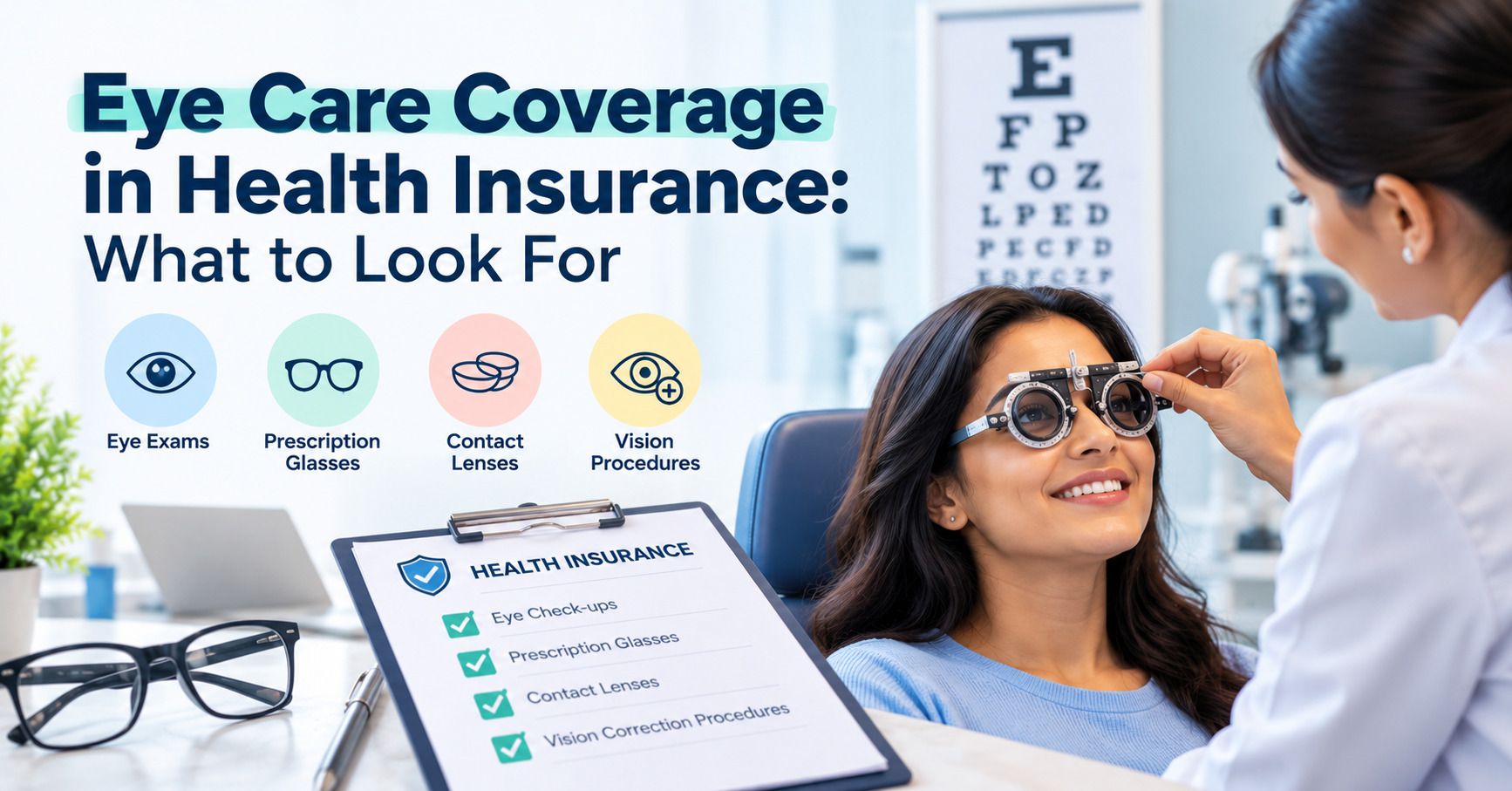
Many Indians discover at the billing counter that their policy was designed for hospital stays, not everyday eye care. So, what about the later part? We’ll explain how eye care insurance plans work in India, what vision insurance plans usually cover (and quietly skip), and the best eye care insurance for yourself and your family, without paying for things you may never use.
Why Eye Care Cover Deserves a Place in Your Health Plan
The scale of the problem is bigger than most of us assume. According to the estimation of The World Health Organization (WHO) at least 2.2 billion people worldwide have a near or distance vision impairment, and in at least 1 billion of those cases it could have been prevented or has yet to be addressed. Cataract (94 million) and refractive error (88.4 million) lead the causes of distance vision loss, while presbyopia, the age-related difficulty with reading small print, affects 826 million people. The annual global productivity loss is estimated at US$ 411 billion. The WHO also stresses that for conditions like diabetic retinopathy, early detection is what prevents irreversible vision loss. In other words, regular check-ups matter, and so does being able to afford them.
India’s own data tells a similar story. The National Blindness and Visual Impairment Survey (2015–19), led by AIIMS’ Dr Rajendra Prasad Centre for Ophthalmic Sciences for the Ministry of Health, estimated nationwide blindness prevalence at 0.36% and found cataract behind 66.2% of blindness among people aged 50 and above. While the encouraging part is that much of this is treatable, the catch is paying for it.
Why Your Policy Ignores the Thing You Use Most
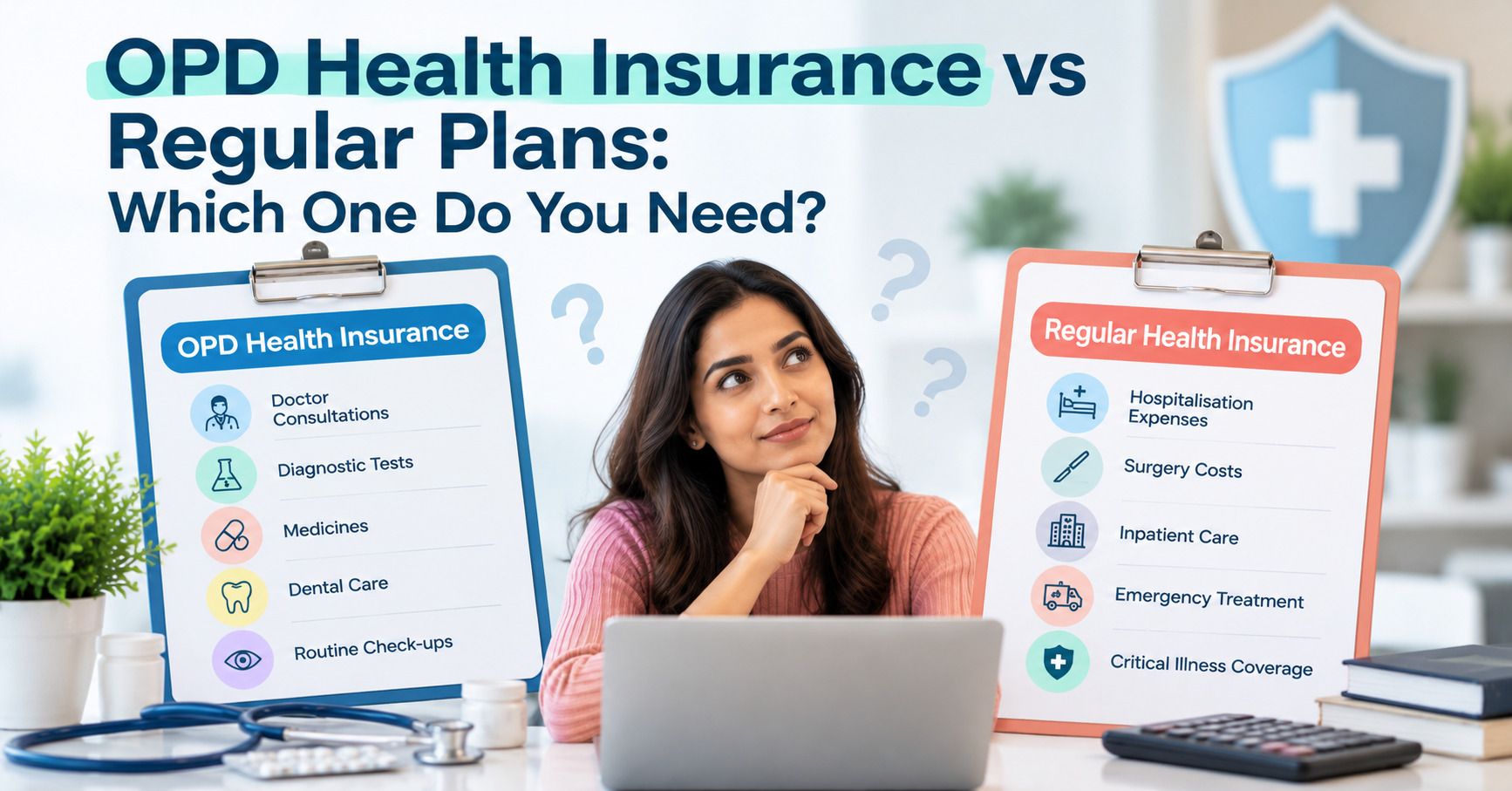
Most health insurance in India is built around hospitalisation and that makes sense. Often a surgery bill is the big, scary one, and it deserves protection. But most of what families spend on health is quieter: consultations, tests, medicines, follow-ups.
According to the Ministry of Health’s latest National Health Accounts, covering 2022–23 and released in May 2026, show that 43.4% of India’s total health spending still comes out of people’s own pockets. In simple maths, that’s roughly ₹43 of every ₹100. Eye care sits right in that zone, which is why eye care health insurance so often leaves people surprised.
Eye Care Health Insurance vs Vision Insurance Plans: What Is the Difference?
India does not have a separate, standardised product called “vision insurance” the way some countries do. Instead, eye care insurance reaches you in three different ways:
- Hospitalisation cover in a regular health policy, which pays for eye surgeries and treatment that need admission or day-care.
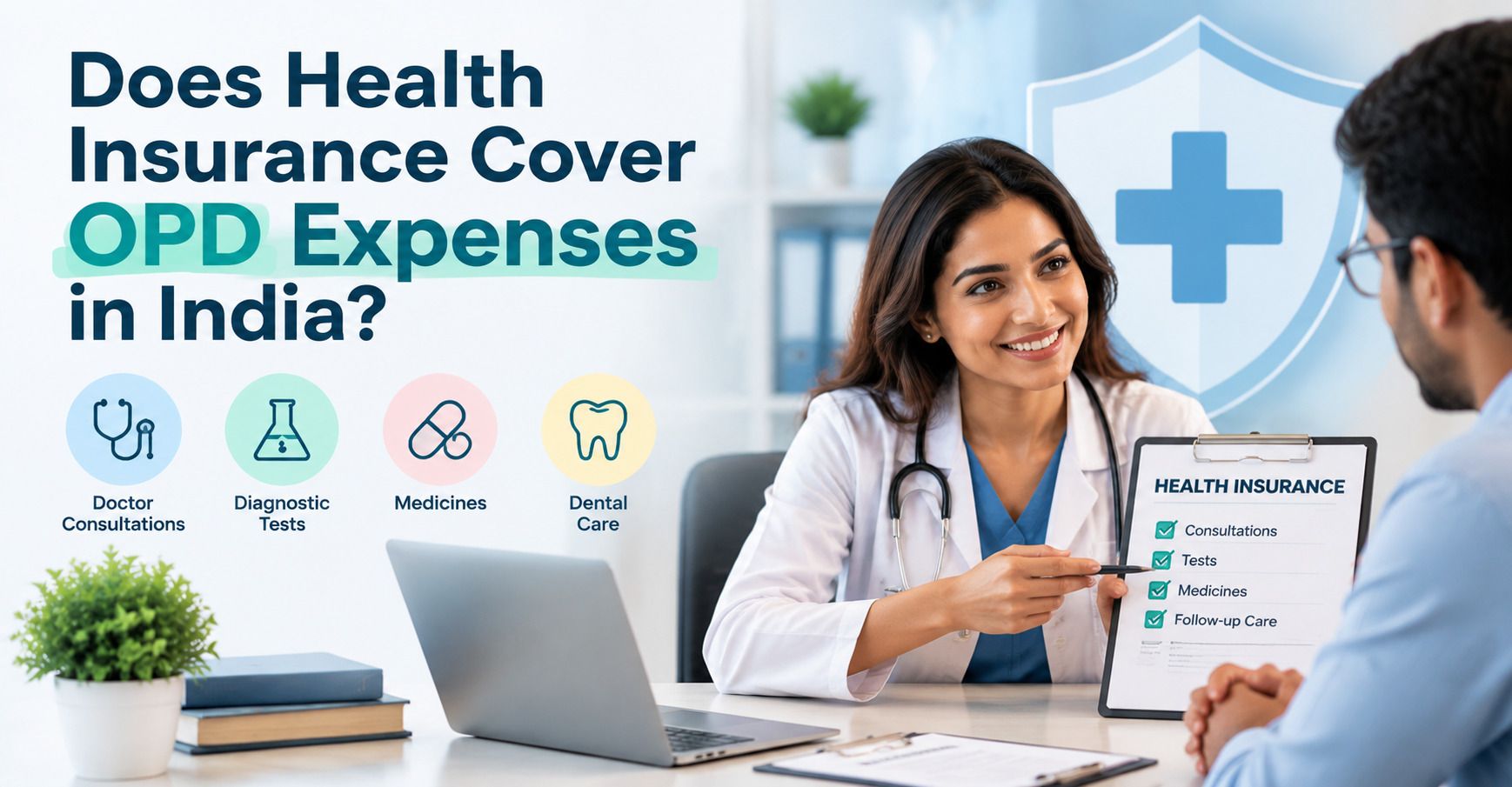
- OPD riders or add-ons from some insurers, usually with small sub-limits for consultations and tests.
- OPD benefit programmes and wallets, which are not insurance but let you pay for everyday care, such as eye check-ups, cashlessly.
Many optical insurance plans you see advertised online are really a mix of these. So the right question is not “which policy has the word eye in its name?” but “which combination pays for the care I actually use?”
If the basics feel fuzzy, our guide on what OPD cover means is a good start point.
Here is how typical insurance eye care benefits look in practice:
| Eye care need | Regular health insurance | What to check |
|---|---|---|
| Cataract surgery | Usually covered after a waiting period | Per-eye sub-limits and lens type |
| Glaucoma, retinal or diabetic eye surgery needing admission | Usually covered, subject to pre-existing disease rules | Declare conditions honestly at purchase |
| Eye injury from an accident | Usually covered | Hospital or day-care treatment |
| Routine eye test and consultation | Usually not covered | Needs an OPD benefit |
| Spectacles and contact lenses | Usually not covered | Needs an OPD or optical plan |
| LASIK or correction of refractive error below 7.5 dioptres | Excluded as a standard exclusion | Errors of 7.5 dioptres or more fall outside this exclusion; confirm wording |
IRDAI’s standardised exclusions (code Excl15) leave out the cost of correcting eyesight for refractive error below 7.5 dioptres. Cataract, on the other hand, is usually a “specified disease”, so claims open only after a waiting period. Many policies set it at around two years, and IRDAI’s 2024 rules cap such waits at 36 months.
7 Things to Look for in the Best Eye Care Insurance Plans
Use this checklist whenever you compare eye care insurance plans or any policy that promises eye cover.
1. An OPD benefit that explicitly includes vision
Hospital-only cover skips eye tests, which is where most eye care begins. Look for an OPD benefit that names vision consultations and check-ups, and read the sub-limit. Learn whether health insurance covers OPD expenses in detail.
2. Cataract waiting period and sub-limits
Cataract is usually a “specified disease”, so claims open only after a waiting period, commonly around two years. IRDAI’s 2024 rules cap such waiting periods at 36 months. Also look for caps on the amount payable per eye.
3. A clear refractive-surgery clause
Planning LASIK or similar surgery? Read the exclusion wording closely. Because of the 7.5-dioptre rule, most elective correction will not be payable, so plan to self-fund it rather than assume cover.
4. Know the pre-existing disease clock
Diabetes-related eye problems and glaucoma should be declared at proposal. IRDAI caps the pre-existing disease waiting period at 36 months, and after 60 continuous months of cover, claims generally cannot be contested for non-disclosure except in proven fraud.[5] Honest disclosure always protects you.
5. Cashless network and day-care coverage
Cataract surgery is typically day-care. Confirm your preferred eye hospital is in the cashless network.
6. A family-friendly structure
Children need regular vision screening and elders need cataract care. A family floater can suit both, but compare how the shared limit interacts with sub-limits.
7. Transparency before you pay
Ask for the Customer Information Sheet, which summarises waiting periods, exclusions, co-payments and sub-limits. Then use the 30-day free-look period to exit if the terms do not fit.
The Smart Move: Pair Hospital Cover with an OPD Plan
Honestly, there is no single best eye care insurance in India that does it all. While a hospitalisation policy handles big, sudden bills, an OPD benefit handles the small, frequent ones. Regular check-ups matter because, as the WHO notes, early detection and timely treatment of conditions such as diabetic retinopathy are crucial to avoid irreversible vision loss.
Where Prime Care Fits In (and Where It Doesn’t)
We’ll be upfront. Prime Care, operated by ZAP Private Limited and powered by Alyve Health, is an OPD benefit programme. It is not an insurance policy, and it does not replace one. It is built for the everyday healthcare that regular health insurance leaves out: doctor consultations, prescribed medicines, diagnostic tests, dental care and vision consultation and check-ups.
- No waiting period, no medical tests: a two-minute KYC with your name, phone and email is all it takes. Activation can take up to two working days after payment.
- Cashless: scan your Alyve QR at partner clinics, pharmacies and labs, with no reimbursement paperwork.
- Family-ready: up to four family members share one OPD wallet.
- 15-day refund promise: cancel within 15 days for a full refund, provided no benefits have been used.
Know the limits
Prime Care does not cover hospitalisation or surgery. Benefits follow category sub-limits, each Alyve QR transaction is capped at ₹1,000, unused balance does not carry forward, and plans are for adults aged 18 and above. Keep your hospital policy; add us for the everyday stuff.
Your eyes deserve everyday cover, stop paying for eye check-ups out of pocket! See exactly what each Prime Care OPD plan covers, including vision, dental, diagnostics and pharmacy, and pick the OPD wallet that fits your family. Get yourself covered!
Frequently Asked Questions
Does health insurance cover eye treatment in India?
Yes, mostly for treatment that needs hospital or day-care admission, such as cataract surgery, after the waiting period and within sub-limits. Routine eye tests, spectacles and contact lenses are usually outside regular policies. Always read your policy wording.
Is LASIK covered by health insurance?
Usually not. IRDAI’s standard exclusion leaves out correction of refractive error below 7.5 dioptres. Higher errors fall outside the exclusion, but payment depends on your insurer’s wording, so seek written pre-authorisation.
Are spectacles and contact lenses covered by vision insurance plans?
Standard health policies do not cover them. Some OPD riders or wallets may cover vision-related expenses up to a sub-limit, so check exactly what is listed. Prime Care covers vision consultation and check-ups; confirm the vision sub-limit on its coverage page before assuming lenses are included.
Is Prime Care an insurance plan, and is there a waiting period?
Prime Care is an OPD benefit programme, not insurance, and it does not cover hospitalisation or surgery. There is no waiting period; activation can take up to two working days after payment, and you can claim a full refund within 15 days if no benefits have been used.