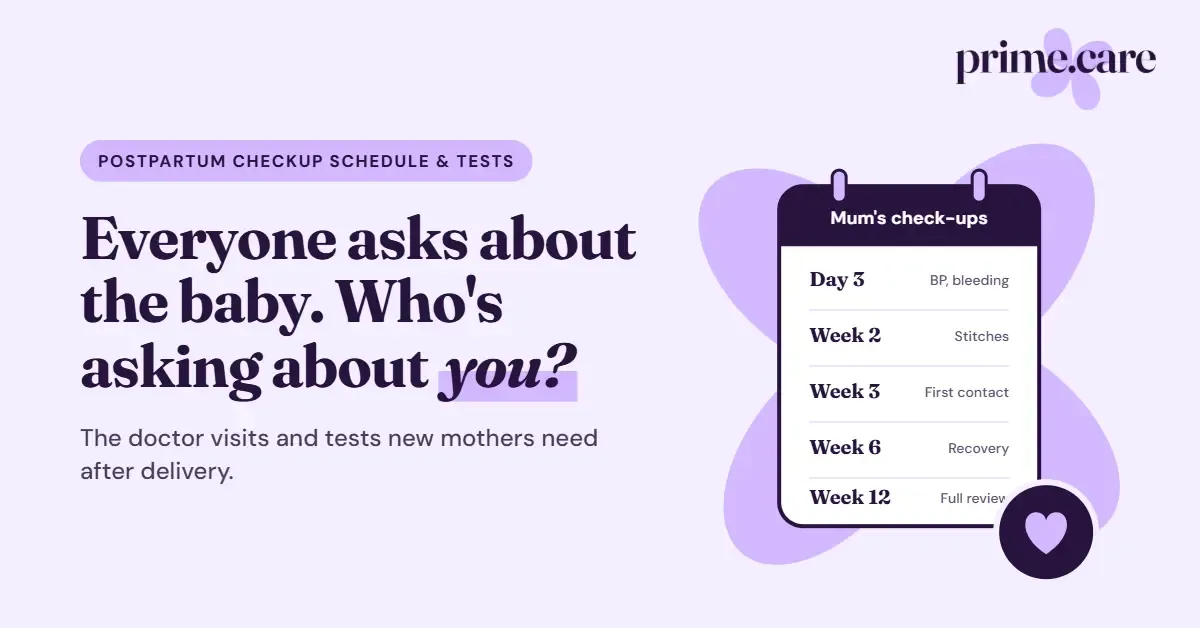
Let’s start with a scenario. Everyone’s happy, the baby has arrived, the house is full of relatives, sweets and advice. Everyone wants to know the newborn’s weight, how often she feeds and whether the baby looks like his dadaji. But who is asking about you?
It’s the weeks after delivery when a mother’s body and mind need the closest watching, yet this is exactly when her own health slips to the bottom of the list. We often speak to new mothers, and one sentence keeps coming up: “I’ll see the doctor once the baby settles down.” Honestly, the baby doesn’t settle down. Not for months. Meanwhile, Mum’s own postpartum checkup keeps getting ignored.
We get it. When your body feels like it belongs to someone else, a clinic visit sounds like a luxury. It isn’t. Worldwide, more than three in ten women and babies do not receive postnatal care in the first days after birth, the very period when most maternal and infant deaths occur.
With a well-timed postpartum checkup, heavy bleeding, infection, high blood pressure, anaemia and postpartum depression can be caught before they turn serious. So pour yourself some chai (or water, hydration matters) and let’s walk through your postnatal visit schedule, the tests to expect, and the question we hear most: “Will my insurance pay for all this?”
Why Your Postpartum Checkup Is More Important Than You Think
WHO describes the postnatal period, which runs from birth to 42 days, as a critical time for women, newborns and families. Doctors often call the first three months the “fourth trimester” because recovery, hormonal shifts, feeding and sleep loss all happen together.
For years, many mothers had just one visit, around the six-week mark, until the guidelines caught up with reality. ACOG’s Committee Opinion 736 stated that postpartum care should be an ongoing process rather than a single encounter, with first contact within three weeks and a comprehensive visit no later than 12 weeks after birth. In India, the Ministry of Health and Family Welfare’s Home Based Newborn Care programme has ASHA workers visit on days 3, 7, 14, 21, 28 and 42 after a hospital birth, with one extra visit within 24 hours after a home birth. These visits focus mainly on the baby, so book your own postnatal checkup with a doctor alongside them.
India’s own numbers show why this matters:
- Anaemia affects 57% of Indian women aged 15–49, according to NFHS-5 (2019–21), so many women enter delivery with low iron reserves.
- As per a meta-analysis in the Bulletin of the World Health Organization, 22% of Indian mothers experience postpartum depression.
- Under the Government’s Home Based Newborn Care programme, over 1.46 crore newborns (89.3%) received scheduled ASHA home visits in 2023–24.
In short, one visit in six weeks is not enough. Guidelines laid by the World Health Organization ask for a minimum of four contacts since most maternal and newborn deaths occur in the first three days, with another rise in the second week. Risks don’t politely wait for week six, so neither should you. Moreover, WHO’s postnatal care release adds that when health risks show up, more contacts will be needed, sometimes well beyond six weeks.
Postnatal Visit Schedule: When Should You See a Doctor?
Here is a practical postnatal visit schedule that combines WHO, ACOG and Indian programme guidance. Your doctor may adjust it depending on how you delivered it and your health history.
| When | Where | What it focuses on |
|---|---|---|
| First 24 hours | Hospital or birthing place | Full maternal and newborn assessment; WHO advises at least 24 hours of care after a facility birth. |
| 48–72 hours (day 3) | Clinic or home visit | Bleeding, pain, temperature and feeding. ASHA’s first scheduled home visit also falls on day 3. |
| Days 7–14 | Doctor or clinic | Stitches or wound check, blood pressure, breast health and an early mood check. |
| By week 3 | Phone, video or in person | ACOG’s first contact: sleep, pain, feeding, mood and any worries. |
| Week 6 (day 42) | Gynaecologist | Recovery review, contraception, return to exercise and intimacy; WHO’s fourth contact. |
| Up to 12 weeks | Obstetrician or physician | ACOG’s comprehensive visit covering physical, social and emotional well-being. |
Had gestational diabetes, pre-eclampsia, a C-section or a premature baby? Book extra visits and tell the doctor about every symptom, however small.
How to Prepare for Your Postnatal Checkup
- Carry your discharge summary, delivery notes and prescriptions.
- Write down your questions on pain, bleeding, feeding, sleep, exercise and contraception.
- Note your symptoms and how long they have lasted.
- Bring your partner or a family member who can hold the baby and remember the advice.
- Ask about the baby’s vaccinations so you can plan both follow-ups together.
What Happens During a Postnatal Checkup?
ACOG says a comprehensive visit should cover mood and emotional well-being, infant care and feeding, contraception and birth spacing, sleep and fatigue, physical recovery, chronic disease management and general health. In practice, expect the following:
- Vitals: blood pressure, pulse, weight and temperature.
- Physical recovery: uterus size, vaginal bleeding (lochia), stitches or C-section scar, and pelvic floor strength.
- Breast and feeding review: latch, pain, engorgement or blocked ducts.
- Emotional check-in: questions about mood, anxiety, sleep and support at home.
- Planning ahead: contraception, vaccinations and managing conditions such as thyroid problems or diabetes.
C-Section Mothers: Extra Care Is Needed
Recovering from abdominal surgery while looking after a newborn is demanding. Along with the standard schedule, ask your surgeon to examine the wound within the first one to two weeks. Report redness, oozing, fever or rising pain immediately, and avoid lifting anything heavier than your baby until your doctor clears you.
Don’t Skip the Mental Health Check
Baby blues, tearfulness and mood swings are common in the first week. Postpartum depression is different: it lasts longer, deepens and needs treatment. WHO’s latest guideline recommends screening for postnatal depression and anxiety, with referral and management where needed.
Indian research links postpartum depression with financial difficulties, lack of support from the husband, marital conflict, domestic violence and past mental illness. If you feel hopeless, cannot sleep even when the baby sleeps, or have thoughts of harming yourself or your baby, speak to a doctor today. Partners and family, a sincere “How are you, really?” can change everything.
Red Flags: When to Seek Help Immediately
Pregnancy-related complications can occur up to a year after birth, so do not wait for your next scheduled visit if you notice:
- Heavy vaginal bleeding, or discharge that smells bad
- Severe headache that will not go away, vision changes or swelling of the face
- Chest pain, trouble breathing, dizziness or fainting
- Fever, or pain and swelling in one leg
- Thoughts of harming yourself or your baby
These signs are drawn from the CDC’s urgent maternal warning signs. If any appear, go to the nearest hospital or call 112. You know your body best, so trust your instincts.
Postnatal Tests New Mothers May Need
Not every mother needs every test. Your doctor will decide based on your delivery, symptoms and history. These are the ones commonly advised:
- Blood pressure monitoring: High blood pressure can appear or worsen after delivery, even after a normal pregnancy.
- Haemoglobin (CBC): Checks for anaemia, which is widespread in India. Iron supplements may continue if levels are low.
- Blood sugar test: Mothers who had gestational diabetes are usually advised a glucose test a few weeks after delivery, as the long-term risk of type 2 diabetes remains.
- Thyroid profile: Suggested for extreme tiredness, hair fall, palpitations, mood swings or a thyroid history.
- Depression and anxiety screening: Often a short questionnaire such as the Edinburgh Postnatal Depression Scale, widely used in Indian studies.
- Pap smear: If you are due for cervical screening.
- Ultrasound: Only if there is prolonged bleeding, severe pain or suspected retained tissue.
Let’s Talk Money: Postpartum Checkup Cost, OPD and Insurance
Nobody prints this part on the discharge summary. Health insurance basically covers inpatient hospitalisation, and most policies don’t include outpatient expenses. However, some insurers now sell OPD add-ons. But the lesson holds: your delivery may be covered while follow-up consultations and routine tests may not be.
If you delivered in a government facility, the Janani Shishu Suraksha Karyakram (JSSK) entitles you to free delivery, drugs, diagnostics, and more, along with exemption from user charges. State NHM pages say this exemption covers the antenatal and postnatal period. Our guide to OPD cover in health insurance breaks down how to read your plan without a law degree.
How Prime.Care Supports Your Postpartum Recovery
Between night feeds, stitches and visitors, getting to a clinic can feel impossible. Prime.Care makes follow-ups simpler. You can consult a doctor online for non-emergency postnatal questions, plan your next in-person visit and keep your health records handy for every appointment.
Our plans give you a cashless OPD wallet, within plan limits, that you can use for consultations and tests during your postpartum journey, along with guided wellness sessions. Moreover, when you are ready to get back to exercise, you can also pick up a Fit-Pass or cult gym membership at a good deal.
See the full table on our coverage page and get your Prime.Care plan now.
Frequently Asked Questions
When should I have my first postpartum checkup?
ACOG recommends contact with a maternal care provider within the first three weeks, by phone or in person. WHO’s schedule starts earlier, with assessment in the first 24 hours, then at 48–72 hours, days 7–14 and week six. If you notice any warning sign, do not wait.
How many postnatal visits do I need?
For a healthy mother and baby, WHO recommends a minimum of four contacts. In India, ASHA workers make six home visits after a hospital delivery and seven after a home birth. Mothers with complications will need more.
Is a postpartum checkup necessary if I feel fine?
Yes. Some complications, including high blood pressure, anaemia and depression, can be silent at first. ACOG recommends contact within three weeks and a comprehensive visit by 12 weeks for every mother.
Is the six-week postnatal checkup enough?
It is an important milestone, but it should not be your only visit. ACOG recommends ongoing care, concluding with a comprehensive visit no later than 12 weeks after birth.
Which tests are done at a postpartum checkup?
Commonly advised tests include blood pressure monitoring, haemoglobin, blood sugar (after gestational diabetes), thyroid tests if symptoms exist, and a mood screening. Your doctor will personalise the list.
Can I have a postnatal checkup online?
Many follow-up conversations about feeding, sleep, mood, medicines and test reports can be handled by teleconsultation. Blood pressure checks, wound examination and pelvic assessment need an in-person visit, and emergencies need a hospital.