“I’ll go after Diwali.” “Nothing hurts, so I’m fine.” “Let me first sort out the kids’ admissions.” Most women we talk to have said something like this, often for years. In most Indian homes, women are the unofficial health managers, tracking everyone’s appointments while their own slide down the list.
Even the data says the same. NFHS-5 figures, analysed in a published review of India’s cancer screening programme, show that only 1.9% of women aged 30 to 49 had ever been screened for cervical cancer, and 0.9% for breast cancer. Meanwhile, the Government of India told the Lok Sabha that 57% of women aged 15 to 49 are anaemic.
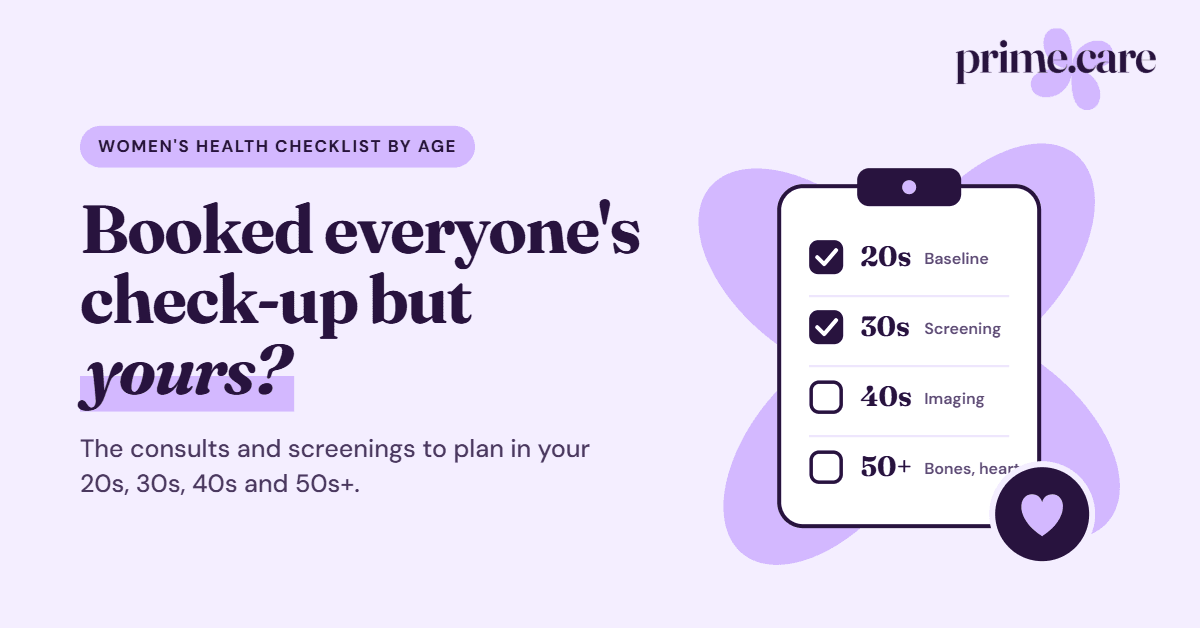
None of this is about blame. It is about planning. Here’s our attempt to shorten that list of excuses. Our women’s preventive health checklist breaks routine care into life stages, so you know which screenings and consultations to expect, and when. And since October is Breast Cancer Awareness Month, it is a good time to pencil in your own appointment.
Your Women’s Health Checklist, Life Stage by Life Stage
Late Teens and 20s: Set Your Baseline
This decade is about drawing the first map of your health.
- Yearly check-up: height, weight, blood pressure and a complete blood count to check haemoglobin. With anaemia this common, this one is not optional.
- Gynaecologist consult: for painful, very heavy or irregular periods, and for contraception or sexual-health counselling. “Normal for women” is not a diagnosis.
- Thyroid test: if your cycles are irregular or you are tired all the time, ask about TSH. Our guide on thyroid care across the year explains what to expect.
- HPV protection: India began a free single-dose HPV vaccination drive for 14-year-old girls on 28 February 2026, and crossed 80 lakh vaccinations by mid-September. If you are older, ask your gynaecologist whether the vaccine makes sense for you.
- Dental, eye and mental well-being check-ins: quick, inexpensive and very easy to postpone.
Your 30s: Where Routine Screening Begins
This is the decade the national programme formally kicks in, and also the decade life gets busiest.
- Cervical screening: a VIA test, Pap smear, or HPV test, at intervals your gynaecologist sets. According to the Health Ministry, cervical cancer is the second most common cancer among women in India, with nearly 80,000 new cases and over 42,000 deaths a year. It is also among the most preventable.
- Clinical breast examination: a quick physical check by a trained doctor or nurse. Between visits, get to know your own breasts. Any new lump, nipple change or persistent pain deserves a consult.
- Blood pressure and blood sugar: both are part of the 30-plus screening. If your reading comes back high, our piece on high BP in your 30s will help you set up a follow-up routine.
- Oral examination: especially important if you chew tobacco or paan.
- Pregnancy planning: a pre-conception consult, folic acid advice and regular antenatal visits. NFHS tracks at least four antenatal visits, which is a sensible minimum to aim for.
How Is Preventive Care Different for Women Over 40?
After 40, preventive care shifts from building a baseline to catching change early. Screening becomes more frequent and more imaging-based, metabolic tests turn into annual routines, and perimenopause adds new conversations about periods, sleep, mood, bones and heart health.
- Breast imaging enters the picture. Keep the yearly clinical exam, and ask about mammography. Many doctors suggest starting around 40, or earlier if close relatives have had breast or ovarian cancer. ICMR researchers count breast cancer among the most common cancers in Indian women.
- Metabolic checks become annual. Fasting sugar or HbA1c, a lipid profile, thyroid levels and blood pressure all deserve a yearly look.
- Perimenopause needs a name. As per the World Health Organization, most women reach menopause between 45 and 55, and perimenopause can last several years, bringing hot flushes, night sweats, poor sleep and mood changes. WHO also points out that menopause is rarely discussed, so many women do not realise their symptoms are connected.
- Heart and bones need attention. According to WHO, women’s advantage over men in cardiovascular disease fades after menopause, and falling bone density raises the risk of osteoporosis and fractures. Ask whether a bone density (DEXA) scan is right for you.
50s, 60s and Beyond: Protect Your Heart, Bones and Independence
Keep every screening above going, and add bone density follow-ups, a yearly eye exam for cataracts and glaucoma, hearing checks, and a talk with your doctor about colon screening and adult vaccines such as flu and pneumococcal. Strength training and fall prevention matter more than most people think. Any bleeding after menopause, however light, needs a prompt doctor’s visit.
Women’s Preventive Health Screenings, Decade by Decade
| Age | Consults to plan | Tests and screenings to discuss |
|---|---|---|
| 18–29 | General physician, gynaecologist, dentist, eye check | Haemoglobin/CBC, blood pressure, thyroid if symptomatic, HPV vaccination |
| 30–39 | General physician, gynaecologist, dentist | Cervical screening, clinical breast exam, oral exam, blood pressure, blood sugar, lipids |
| 40–49 | General physician, gynaecologist, eye specialist | All of the above, plus mammography discussion, HbA1c, thyroid, perimenopause review |
| 50+ | General physician, gynaecologist, eye specialist | Mammography, cervical screening, bone density, lipids, sugar, colon screening discussion |
Myths Around Women's Healthcare
Myth 1: “If nothing hurts, I’m healthy”
Many conditions worth catching early are quiet. Take anaemia, a common and easily missed health concern, as an example. Anaemia is a condition in which your blood has too few healthy red blood cells, or too little haemoglobin, to carry enough oxygen around your body. Tiredness, dizziness and breathlessness on the stairs often get written off as “just life”. One simple blood count can tell the difference. If you have felt run down for months, ask for a complete blood count before you reach for another tonic.
Myth 2: “Check-ups can wait until I’m 40”
Your 20s are for setting a baseline: blood pressure, weight, and haemoglobin. It is also the time to get painful or irregular periods looked at instead of adjusting to them, and to ask about a thyroid test if your cycles are erratic.
Myth 3: “Cervical cancer is rare”
It isn’t. In India, cervical cancer is the second most common cancer among women, with roughly 80,000 new cases and over 42,000 deaths a year. So, the hopeful part is that it is among the most preventable, through HPV vaccination and regular screening (a VIA test, Pap smear or HPV test).
Myth 5: “Menopause is just hot flushes, so grin and bear it”
WHO says most women reach menopause between 45 and 55, and that perimenopause symptoms can continue for years. Additionally, women’s advantage over men in cardiovascular disease fades after menopause, and falling bone density raises the risk of osteoporosis and fractures. We suggest you to talk about it early. Visit your gynaecologist or general physician in your mid-40s, before symptoms pile up.
Myth 6: “Mammograms are for later, or only if cancer runs in the family”
Family history raises the stakes and can mean starting earlier, but it is not the only reason to be checked. ICMR counts breast cancer among the most common cancers in Indian women. Discuss mammography around 40, and start yearly clinical breast exams at 30. A new lump, a change in the nipple, or pain that doesn’t go away needs a doctor, not a wait-and-watch approach.
Why Women’s Preventive Health Needs a Plan of Its Own
In general, a woman’s body moves through more phases than one annual check-up can cover: periods, pregnancy, postpartum recovery, perimenopause, menopause and beyond. Each phase has its own risks, and most risks have a test or consult that can spot trouble early.
That is the idea behind women’s preventive health: small, scheduled visits that stop big problems from arriving unannounced.
Under the National Programme for Prevention and Control of NCDs, population-based screening for people above 30 covers hypertension, diabetes and three common cancers: oral, breast and cervical. These are offered at government facilities, including Ayushman Arogya Mandirs. Moreover, private OPD care adds speed and choice.
Making Women’s Healthcare Affordable With Prime.Care
Ask women why they put off check-ups and the answers repeat: no time and nothing hurts. Later, there is cost, a much bigger one.
Most health insurance in India is built around hospital stays, so a routine consult, blood test or scan usually comes out of your own pocket. Those small bills make people delay the visits that prevent big ones.
This is where an OPD plan earns its place. OPD means outpatient care: consultations, tests, and medicines that do not need hospital admission. For a quick refresher, see our explainer on what OPD cover actually means.
Whether you are looking after your own health alone or managing a household, Prime.Care is designed so that everyone is covered: individuals, families and kids. So the next time you put the family’s check-ups on the calendar, yours can go on it too.
Prime.Care is designed for everyday healthcare. Our plans are affordable, with an annual OPD wallet of ₹30,000 to ₹75,000 across consultations, prescribed diagnostics, pharmacy, dental and vision. There is no waiting period, and GP tele-consultation is available 24/7.
Also, one thing to remember: Prime.Care complements hospital insurance and does not replace it. Hospitalisation, surgery and fertility treatments are not covered.
Ready to put your health on the calendar? Explore Prime Care coverage plans and get your OPD plan activated instantly!
Frequently Asked Questions
What should be on a women’s health checklist?
Usually, a basic checklist includes a yearly check-up with blood pressure, weight, and haemoglobin, plus age-appropriate screenings: cervical and breast cancer screening from your 30s, blood sugar and cholesterol checks, thyroid tests when symptoms or family history suggest them, and bone density and mammography discussions from your 40s.
When should women in India start breast and cervical cancer screening?
India’s national programme targets women aged 30 and above for both. Many doctors advise earlier screening if you have a family history, and some suggest mammograms from around 40. Your gynaecologist can set a schedule for your risk.
How often should I get a full health check-up?
Most doctors suggest a general check-up once a year, with specific tests spaced by age and earlier results. Cervical screening, for instance, is not annual for everyone.
Are women’s health screenings available at government facilities?
Yes. Under the NP-NCD, screening for hypertension, diabetes and oral, breast and cervical cancers is offered to people above 30 at government facilities, including Ayushman Arogya Mandirs. Availability of specific tests varies by location.
Do I need a check-up if I feel healthy?
Yes. Screening is designed for people without symptoms. Conditions such as anaemia, high blood pressure and early cervical changes can be silent, and catching them early is usually simpler and cheaper to treat.