You don't buy health insurance thinking about the ₹800 doctor's visit for a viral fever, the ₹1,500 blood test the doctor ordered "just to be safe," or the ₹600 for medicines at the chemist. No one does. We buy it for the big stuff like surgery, hospitalisation, the accident nobody saw coming. And that's exactly why so many of us get caught off guard when we realise the policy we pay a decent premium for every year may not pay a single rupee for the visits we actually make, unless we've specifically asked for that cover.
The hard truth hits when you're paying for a consultation, a prescription, or a dental filling out of pocket, and the question comes up: "Wait, isn't this what insurance is for?" Here’s what OPD coverage means, whether your health insurance covers it, and how an OPD claim works.
First Things First, What Is OPD Coverage?
OPD, or Outpatient Department coverage, is a component of a health insurance policy (either built-in or bought as an add-on/rider) that reimburses or pays cashless for medical expenses incurred without hospital admission. In simple terms, if you visit a doctor, a diagnostic lab, a dentist, or a pharmacy and walk out the same day without being admitted as an in-patient, that expense falls under OPD.
IRDAI (Insurance Regulatory and Development Authority of India) formally defines Outpatient Treatment in standard policy wordings as care where “the insured person visits a clinic, hospital, or associated facility for diagnosis and treatment on a doctor's advice, without being admitted as a day-care or in-patient.” Every OPD benefit sold in India, whether it's a built-in feature or a separate add-on, is built around this one line.
Does Regular Health Insurance Cover OPD Expenses in India?
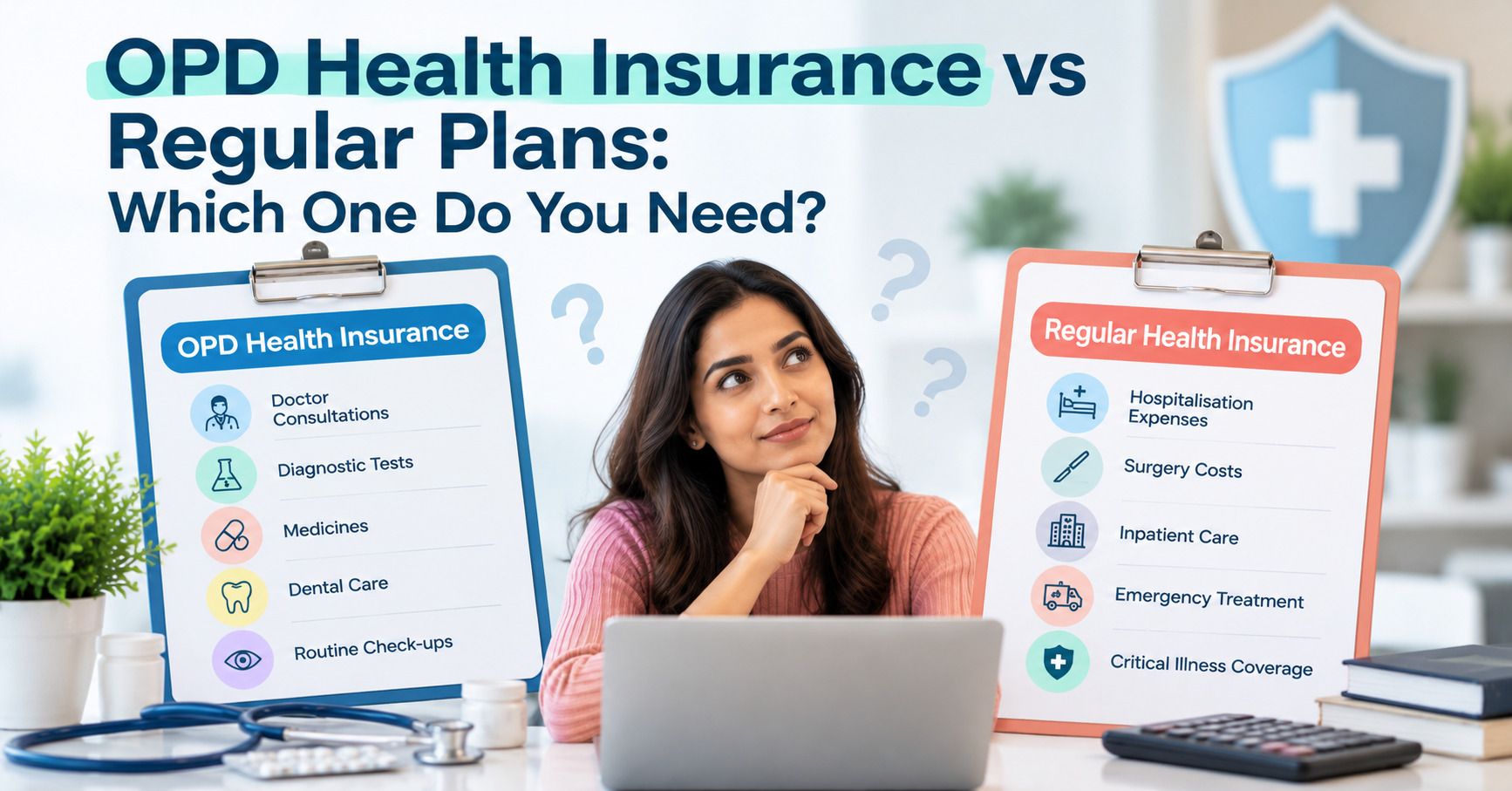
Probably not, unless you specifically checked for it. Most standard, base health insurance (mediclaim) policies in India do not cover OPD expenses by default. Traditional Indian health insurance was built decades ago around the idea of protecting people from the crushing cost of hospitalisation for accidents, surgeries, and critical illnesses. Routine doctor visits, medicines, and lab tests, the day-to-day healthcare every family actually deals with all year round was historically left outside the policy.
That, however, is changing quickly. Insurers have realised that Indians spend far more, far more often, on outpatient care than on hospitalisation, and are now offering:
- Built-in OPD benefits within comprehensive plans (increasingly common in 2025–2026 product launches)
- OPD add-ons or riders that you can attach to your base policy for an extra premium
- Standalone OPD health cards or wellness covers sold independently
- Corporate/group health policies that include OPD as a default employee benefit
The point is, it's never automatic. You have to go looking for it, either in your policy document or before you buy. If the words "OPD," "Outpatient Benefit," or "OPD Rider" don't appear anywhere in your Table of Benefits, you're on your own for these costs.
What Is an OPD Claim and How Does It Work?
An OPD claim is simply how you ask your insurer to pay you back or pay directly for an outpatient expense. It works a little differently from the hospitalisation claims most people are used to, and it usually goes one of two ways.
Cashless OPD: Say Priya's insurer has tied up with a network of clinics and pharmacies near her. When her son needs a check-up, she books an appointment through her insurer's app, walks in, gets treated, and the bill is settled directly with the clinic, cashless. She doesn't pay a rupee upfront.
Reimbursement OPD: Rohan's plan doesn't have that network nearby, so he pays for his consultation and medicines himself, keeps every bill and the doctor's prescription, and uploads them through his insurer's app within the claim window (usually 30-90 days). A few days later, the approved amount lands in his bank account. That's a reimbursement claim.
Either way, one rule never changes: no prescription, no claim. Always insist on a valid prescription from a registered medical practitioner and original, itemised bills. Insurers reject an OPD claim backed only by a cash memo with no prescription attached.
Why OPD Coverage Matters: The Numbers Behind Out-of-Pocket Healthcare in India
Real data on how Indians actually pay for healthcare makes a pretty compelling case.
43.4% of India's Total Health Expenditure in 2022-23 was Out-of-Pocket Expenditure (OOPE). It’s the money households paid directly, without any insurance or government reimbursement, up from 39.4% the previous year, as per the National Health Accounts Estimates released by the Union Ministry of Health and Family Welfare. In absolute terms, this amounts to roughly ₹3,82,629 crore, or about ₹2,767 per person, directly from their own pockets in a single year.
Pharmacy purchases alone have accounted for over 40% of India's out-of-pocket healthcare spending, according to National Health Accounts data cited in government policy analyses. This also means a large share of this OOPE burden never touches a hospital bed.
An FICCI–Feedback Consulting study on OPD and preventive health insurance in India found that structured OPD covers, by making early consultation and diagnosis easier and more affordable, could help prevent up to 44% of hospitalisation cases that start from conditions left unchecked at the outpatient stage.
Read that last point again; it's not just about convenience. Skipping a ₹700 consultation because you don't want to pay out of pocket can, down the line, turn into a hospitalisation that costs lakhs. OPD cover isn't just about reimbursing small bills; it's about removing the reason people delay care in the first place.
What Does OPD Coverage Typically Include?
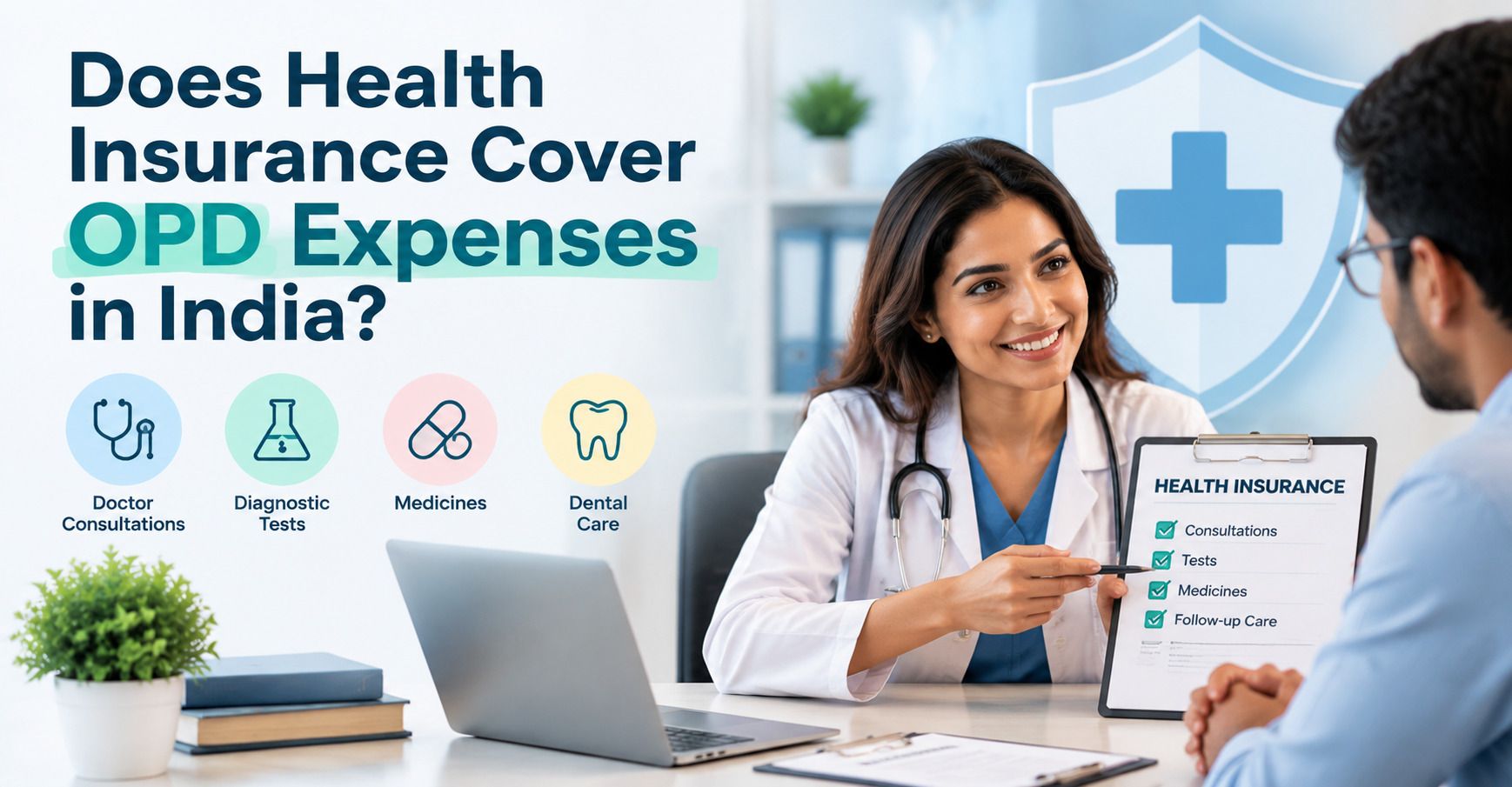
While inclusions vary by insurer and plan, most OPD covers in India reimburse or pay cashless for:
- Doctor and specialist consultation fees (in-clinic and teleconsultation)
- Diagnostic tests including blood work, X-rays, scans, and pathology
- Pharmacy bills for prescribed medicines
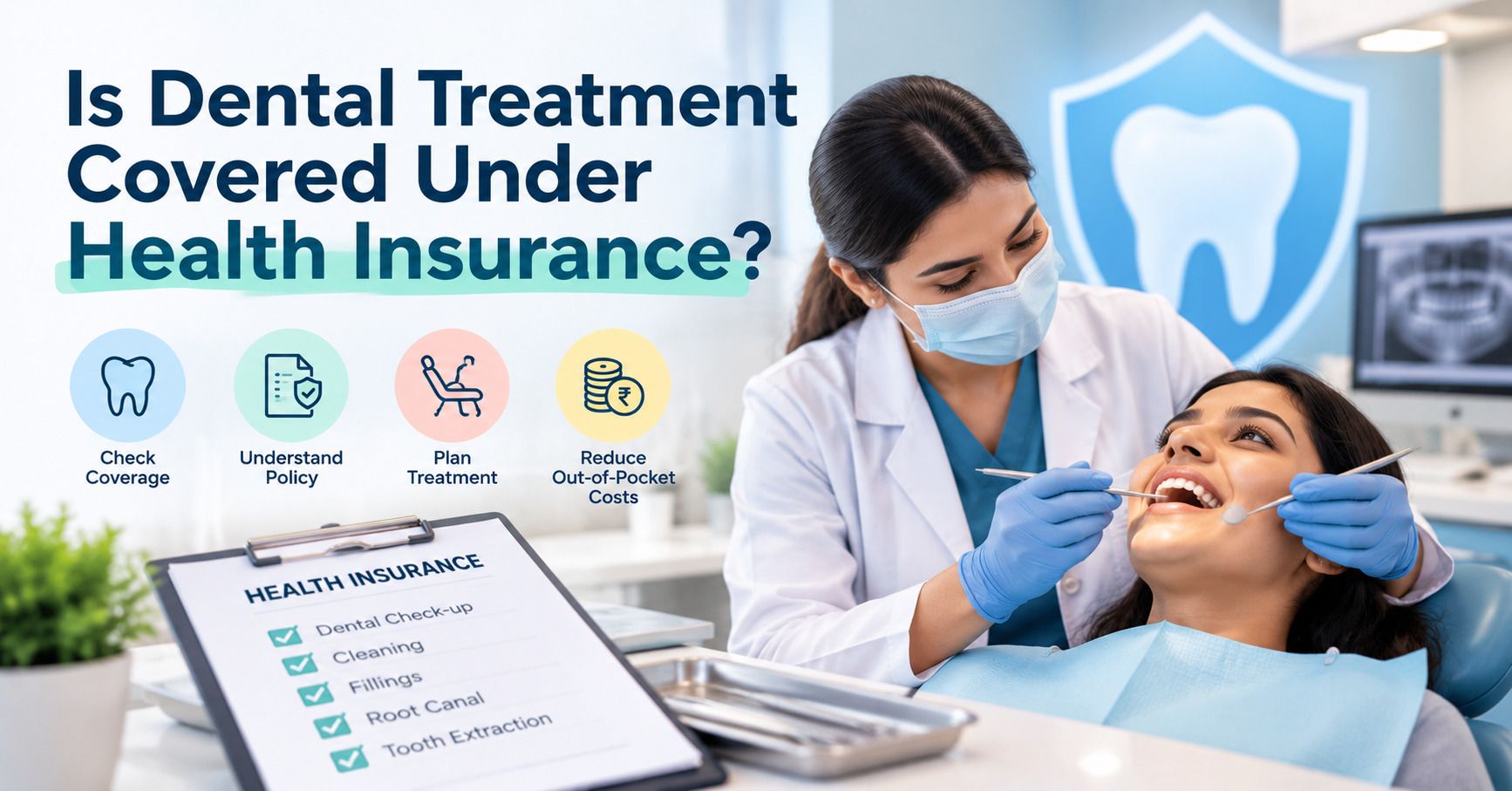
- Dental treatment (check-ups, fillings, and sometimes root canals)
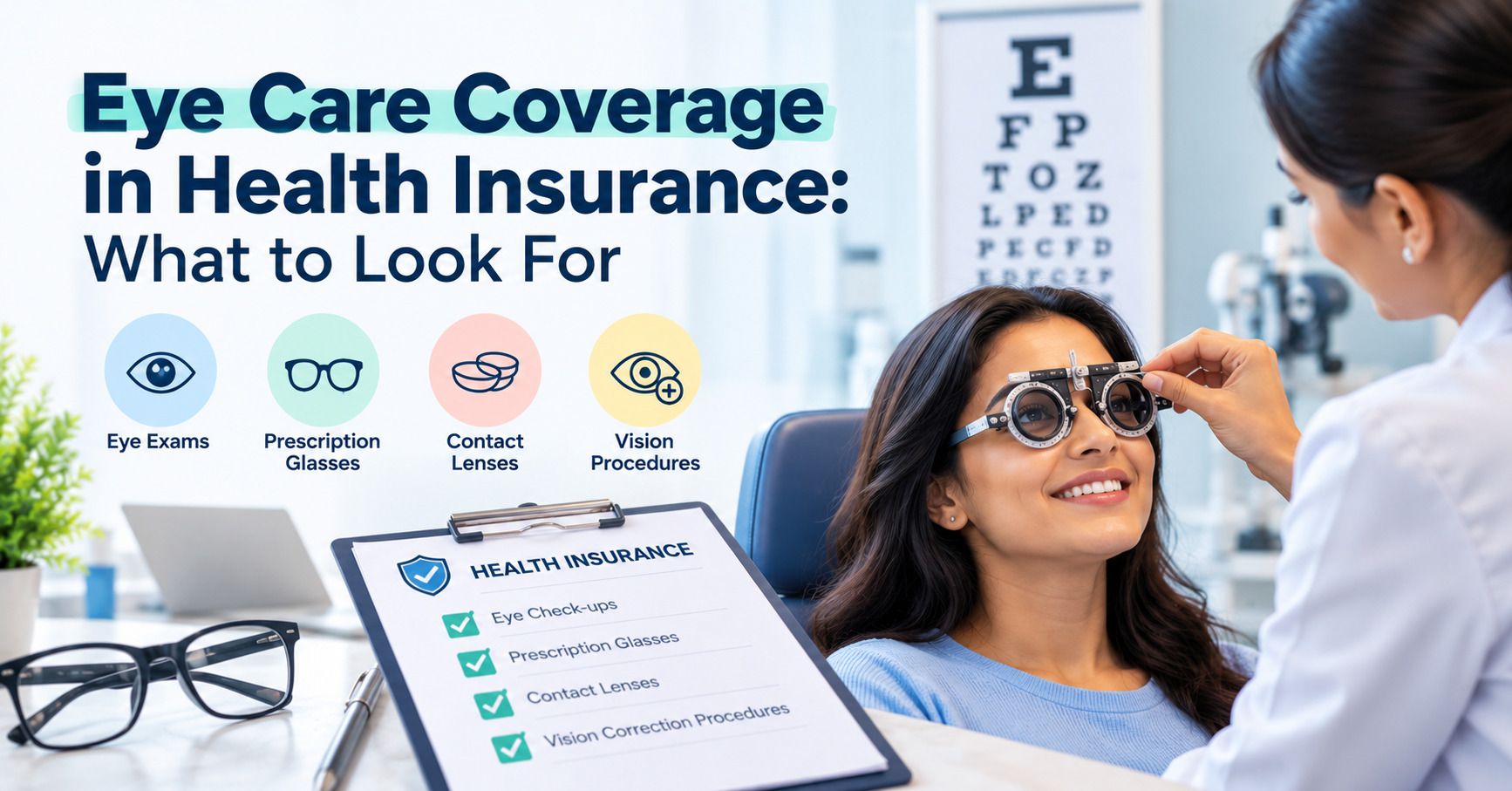
- Vision care, including eye check-ups and spectacles/lenses
- Physiotherapy sessions when medically prescribed
- Annual health check-ups and preventive screenings
- Vaccinations, in select plans
Each of these usually comes with its own internal sub-limit (for example, ₹1,000 on dental, ₹2,000 on diagnostics). So read that fine print before you assume the full amount is yours to use however you like.
How to File an OPD Claim: Step-by-Step
- Consult and collect: Visit a registered doctor and keep the original prescription.
- Preserve every bill: Save detailed receipts for consultations, tests, and pharmacy purchases. Insurers may reject bundled or handwritten bills (though stamped handwritten bills from clinics are often accepted).
- Check network first: If your insurer offers cashless OPD, use an empanelled clinic, lab, or pharmacy to avoid paying upfront.
- Submit within the window: For reimbursement claims, upload bills and prescriptions via the insurer's app or portal before the claim-filing deadline.
- Track and follow up: Most insurers process OPD claims faster than hospitalisation claims since the amounts are smaller. But always track the claim status online.
Tax Benefits on OPD and Health Insurance Under Section 126 (Earlier Section 80D)
Health insurance premiums (including what you pay for OPD riders) qualify for deduction under Section 126 of the Income Tax Act,2025 (Earlier Section 80D), as per the Income Tax Department. Note that this deduction is available only under the old tax regime, not the new one.
- Up to ₹25,000 per year for premiums paid for self, spouse, and dependent children (₹50,000 if you or your spouse is a senior citizen)
- An additional ₹25,000–₹50,000 for premiums paid for parents (₹50,000 if they are senior citizens)
- Within the above limits, a sub-limit of ₹5,000 for preventive health check-up expenses for self and family
So the premium that gets you OPD cover isn't just protecting your everyday health budget, it's quietly working in your favour at tax time too.
Why Buy Your OPD Cover Plan Through Prime.care
Hospitalisation cover protects you from the emergency you hope never happens. OPD cover protects you from the small, steady drip of expenses that happen anyway. Most families need both, and most policies still only give you one.
Before you renew your policy this year, take five minutes to check whether OPD is actually part of it. If it isn't, you know where to look.
Dozens of health insurance plans, each with different OPD sub-limits, network hospitals, and claim processes, choosing between them is a task. But, with Prime.care, , you can compare our policies side-by-side on the basis of OPD benefits, sum insured, premium, and claim settlement track record. No fluff, no fine print hidden in page 47 of a brochure. Just a clear picture of what you're paying for and what you'll actually get back.
Have a look at our plans and get yourself and your family covered today.
Frequently Asked Questions
What does an OPD claim actually mean?
It means asking your insurer to settle (or reimburse) an outpatient bill, supported by a doctor's prescription and an itemised receipt. It's usually processed faster than a hospitalisation claim because the amounts involved are smaller and there's no discharge paperwork to verify.
Will my current health insurance automatically cover OPD expenses?
Not necessarily. Unless your policy explicitly lists an OPD benefit or you've added an OPD rider, your standard hospitalisation-only policy won't reimburse routine doctor visits, tests, or pharmacy bills.
Can I get a tax deduction for OPD-related insurance premiums?
Yes. Premiums for health insurance, including any OPD rider, are eligible under Section 126 (earlier Section 80D) of the Income Tax Act: up to ₹25,000–₹50,000 depending on age, with a ₹5,000 sub-limit specifically for preventive health check-ups. This deduction is available only under the old tax regime.
Is it actually worth paying extra for OPD cover?
If your family visits doctors, gets routine tests done, or needs dental and vision care more than once or twice a year, yes, the math usually works in your favour. With out-of-pocket spending still making up a large share of healthcare spend, an OPD add-on with reasonable sub-limits can actually cut down what you pay from your own pocket every year.