You're rushed to the hospital, admitted overnight, and discharged in two days. Your mediclaim insurance policy kicks in predictably and your room rent, surgery, and medicines are all settled. Relief, right? Now picture the other, far more common scenario: an irritating cough sends you to the doctor thrice in a month, plus a blood test, an X-ray, and a course of medicines; none of it needed a hospital bed. Suddenly, your policy paperwork feels a lot less reassuring, because most of that bill just isn't covered.
We have often talked to people who have really misunderstood this part of health cover in India. So, let’s settle it properly and understand what is a mediclaim insurance policy, how is it different from full-fledged health insurance, and the question everyone eventually asks, does mediclaim cover OPD treatment?
Let's Start With the Basics: What Is Mediclaim Insurance?
Mediclaim is the original Indian term for hospitalisation cover, introduced by the General Insurance Corporation of India (GIC) back in 1986, long before "health insurance" became the industry's preferred phrase. Even today, many people in India use "mediclaim" as a catch-all word for any medical policy, even if the policy in their drawer today is technically a full health insurance plan. But, strictly speaking, a mediclaim insurance policy is a narrower, hospitalisation-focused product.
In its classic form, mediclaim reimburses or pays cashless for expenses connected to inpatient hospitalisation, meaning you were admitted for 24 hours or more. It includes:
- Your hospital room, ICU charges, and nursing care
- The surgeon's and specialist's fees during your stay
- Medicines, oxygen, blood, and operation theatre costs while you're admitted
- Limited window of pre-hospitalisation and post-hospitalisation expenses (commonly 30–60 days before and after, depending on the policy)
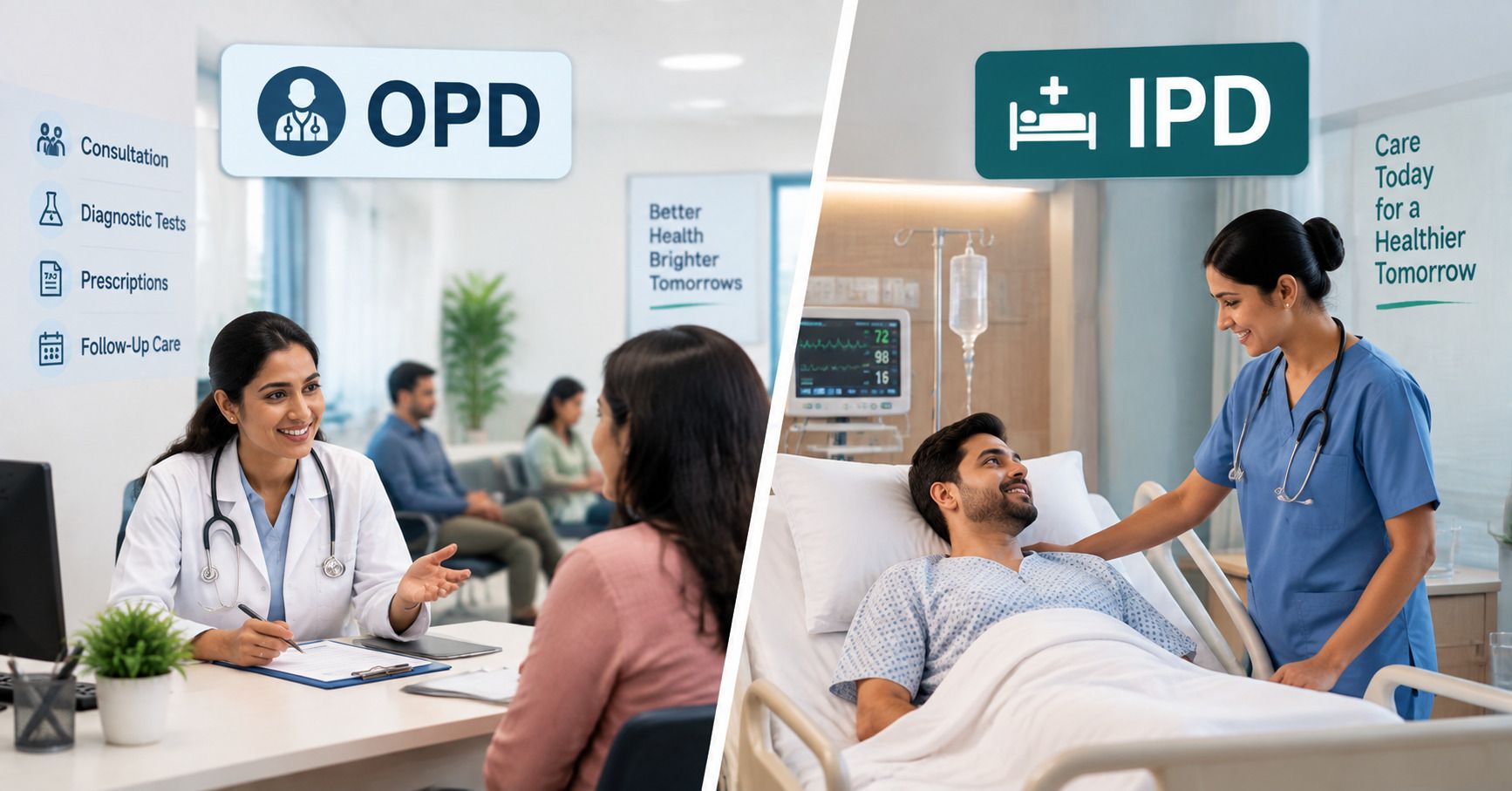
It was never designed for the healthcare that happens outside a hospital bed, without being admitted, like your GP visit, diagnosis and lab reports, dental check-ups, and your monthly prescription. That entire category has a name: OPD treatment.
How Does a Mediclaim Insurance Policy Work?
The mechanics are fairly simple once you've seen them once:
- Pick a sum insured: the maximum amount the insurer will pay in a policy year (commonly ₹3 lakh to ₹1 crore, depending on your needs and budget).
- Pay the premium: usually annually, based on your age, city, medical history, and sum insured.
- Use a network hospital for cashless treatment: the insurer or its Third-Party Administrator (TPA) settles the bill directly with the hospital.
- Or pay first and claim reimbursement: useful for non-network hospitals, with bills and reports submitted afterwards.
Mediclaim vs Health Insurance: What's the Real Difference?
Most confusion lives here only. People use "mediclaim" and "health insurance" interchangeably, but there's a genuine difference between mediclaim and health insurance in scope and depth of cover. Think of mediclaim as the foundation, and comprehensive health insurance as the fully built house.
| Feature | Mediclaim Insurance | Comprehensive Health Insurance |
| Core focus | Inpatient hospitalisation only | Hospitalisation + OPD, wellness, and more |
| OPD treatment | Not covered, in most base policies | Often included or available as an add-on |
| Maternity & fertility | Usually excluded | Available in many comprehensive plans |
| Critical illness/wellness | Rarely included | Frequently bundled or add-on based |
| Premium | Generally lower | Higher, reflecting wider coverage |
| Best suited for | Budget-conscious buyers wanting core hospitalisation protection | Families wanting all-round, everyday healthcare protection |
What Exactly Is OPD Treatment?
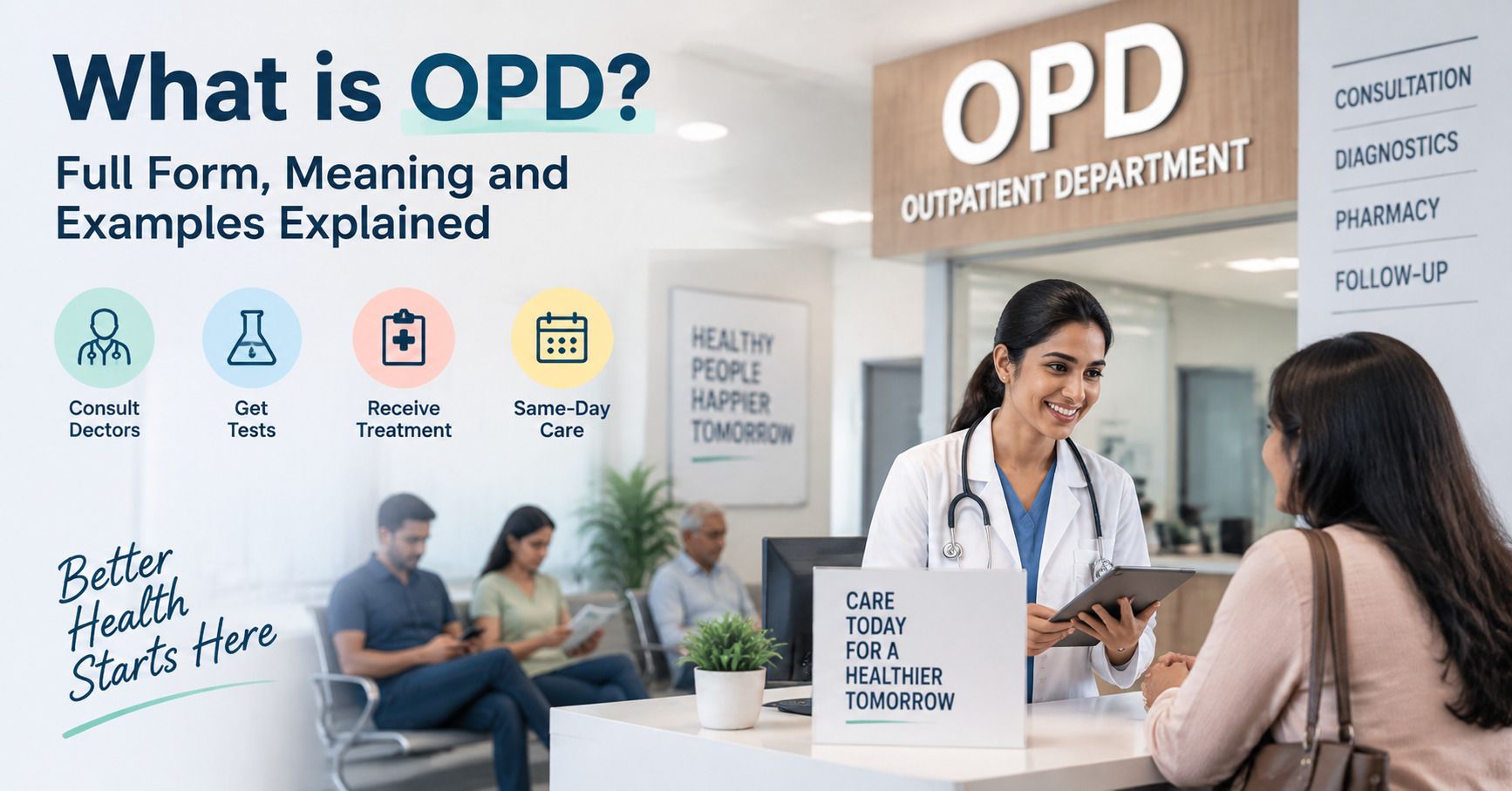
OPD stands for Outpatient Department: any treatment where you visit a clinic, hospital, or diagnostic centre for consultation, get tests or minor procedures done, and go home the same day, without being admitted as an inpatient.
Everyday examples of OPD treatment include:
- Routine visits to your family physician for fever, infection, or a general check-up
- Consultation fee of ₹600–₹1,500 or even more, which you hand over every time you see a specialist
- Diagnostic tests including blood work, X-rays, ECGs, ultrasounds
- Dental treatments like fillings, cleaning, or minor extractions
- Eye check-ups and vision correction consultations
- Prescribed medicines and pharmacy bills
- Physiotherapy sessions
None of these need a hospital bed, yet collectively, they make up a good portion of most Indian households' annual healthcare spend. And for most policyholders, none of it is automatically insured. That's precisely why the mediclaim and OPD question matters so much in practice.
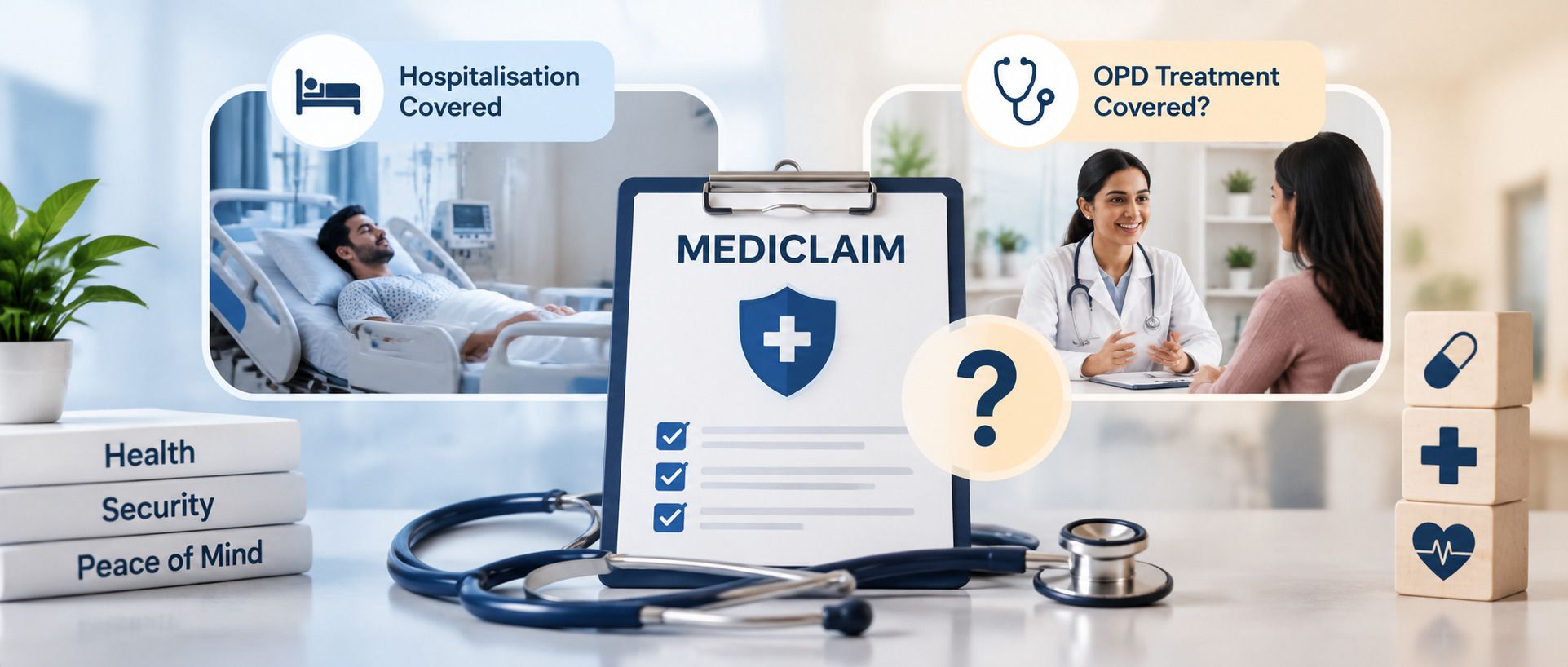
So, Does Mediclaim Actually Cover OPD Treatment?
Honestly? In its classic, bare-bones form, not by default. Standard, traditional mediclaim insurance policy treats OPD consultations, routine tests, and elective procedures as things you handle yourself, unless you've gone out of your way to add cover for them.
But that said, the market has moved. Here's where OPD cover shows up today:
- OPD add-on/rider: An optional cover you attach to your actual medical claim or health policy. You pay a bit extra on top of your base premium, and the insurer reimburses consultations, tests, and pharmacy bills up to a set annual limit.
- Comprehensive health insurance: Newer, broader health insurance products (as opposed to legacy mediclaim policies) now build in a defined OPD benefit as a standard feature, not an add-on.
- Employer or group health covers: Group health covers from workplaces often throw in OPD perks like free teleconsultations, an annual health check-up, and sometimes a wellness allowance.
None of this is accidental. Under IRDAI's health insurance regulations, insurers are directed to give policyholders a choice of coverage across "every situation of treatment including domiciliary hospitalisation, outpatient treatment (OPD), day care and homecare treatment." In practice, this is exactly why OPD riders and comprehensive plans have grown so popular. IRDAI wants outpatient care on the table, even if the base mediclaim product still leans heavily on hospitalisation.
One practical thing to remember: OPD cover almost always comes with its own annual ceiling, kept separate from your main hospitalisation sum insured. So before you assume you're protected, pull out your policy document and check three things:
- Whether OPD is mentioned at all
- What the annual limit is
- Which treatments actually qualify and whether alternative therapies like Ayurveda or Homeopathy are included.
Three Things That Changed Recently, And Why They're Good News
1. Your Premium Just Got Cheaper
At its 56th meeting on 3 September 2025, the GST Council did something insurance buyers had wanted for years: it exempted individual health and life insurance premiums from GST entirely, bringing the rate down from 18% to nil, effective 22 September 2025. This applies to individual health insurance policies, including family floater and senior citizen plans, as confirmed on the Ministry of Finance's official website. So a ₹12,000 premium that earlier cost you ₹14,160 after tax now costs exactly ₹12,000. That's real money you can redirect towards an OPD add-on instead.
2. Claims Move Faster Than They Used To
Under the IRDAI's Master Circular on Health Insurance Business, insurers must decide on a cashless request within one hour and grant final discharge authorisation within three hours of the hospital's request. If they miss that window, the insurer, not you, pays the extra hospital charges caused by the delay. It's a small detail, but it tells you how seriously claim turnaround time is now regulated in India.
3. Tax Benefits Still Apply Under Section 80D
Premiums paid for eligible health insurance (including mediclaim) continue to qualify for deduction under Section 80D of the Income Tax Act, 1961: up to ₹25,000 for self, spouse, and dependent children, rising to ₹50,000 where the insured is a senior citizen, plus a sub-limit of ₹5,000 for preventive health check-ups within that overall cap. However, this deduction is available only under the old tax regime, so always check which regime you've opted into before you file. You can verify current provisions on the Income Tax Department's official portal.
Who Should Actually Care About OPD Cover?
If any of these sound like you, an OPD-inclusive plan probably pays for itself:
- New parents: paediatrician visits, vaccinations, and the occasional 2 a.m. clinic run add up fast in a baby's first two years.
- Anyone managing a chronic condition: thyroid, diabetes, or blood pressure means regular tests and prescriptions, month after month.
- Young professionals living independently: with no family member to "just handle it" when you fall sick, every consultation comes out of your own pocket.
- Senior citizens: older parents typically see a doctor more often than they're hospitalised, and a bare medical insurance policy won't cover the bills.
Conclusion
Mediclaim insurance policy will always be there for emergencies when nothing else matters: surgery, and hospital stays. But on its own, it usually won't pay for the doctor visit, blood test, or medication that happens far more often. When you know how it differs from health insurance, you can build a cover that actually works for you when you need it.
If your current policy leaves you in doubt, see how Prime Care’s OPD plans can fill the gap your mediclaim leaves because the best insurance is the one that shows up on ordinary days, not just extraordinary ones.
Frequently Asked Questions
1. Is mediclaim the same as health insurance?
Not exactly. "Mediclaim" refers to a hospitalisation-only policy, while "health insurance" can include OPD, maternity, wellness, and critical illness cover.
2. Does mediclaim cover doctor consultation fees?
No, unless the consultation is directly tied to your hospital admission (pre- or post-hospitalisation within the specified window), or you've purchased an OPD add-on.
3. Can I add OPD cover to my existing mediclaim policy?
In many cases, yes. Several insurers allow you to attach an OPD rider at renewal for an additional premium. If your current insurer doesn't offer this, you can switch to a comprehensive health insurance plan with built-in OPD benefits.
4. What is the tax benefit on mediclaim premium?
Premiums paid for a mediclaim or health insurance policy qualify for deduction under Section 80D of the Income Tax Act; up to ₹25,000 for individuals below 60, and ₹50,000 where the insured is a senior citizen, subject to old-regime eligibility.
5. Has GST on my mediclaim premium really gone to zero?
Yes, for individual policies. Since 22 September 2025, individual health and life insurance premiums are GST-exempt, following the 56th GST Council's decision to cut the rate from 18% to nil.