One term most people run into halfway through comparing health insurance plans is OPD cover. The brochure says it, the agent mentions it, and every comparison table has a tick or a cross next to it. Yet nobody quite explains what it actually means for you, or for your wallet.
Now imagine you wake up with a scratchy throat and a mild fever. You see a doctor, get a prescription, and pick up the medicines from the chemist next door. Your total bill: ₹1,200 including the consultation fee, a blood test, and the strip of tablets, all paid out of your own pocket. You have health insurance. You've been paying the premium faithfully for two years. And yet, not a single rupee of that ₹1,200 comes back to you. Why? Because, like most first-time buyers, you probably focused entirely on hospitalisation cover and overlooked OPD cover insurance altogether, even though it's the benefit you're most likely actually to use.
Is OPD Cover Worth It?
A fever, a dental filling, an annual eye check-up, a physiotherapy session for that nagging back pain: none of these need a hospital bed, but all of them cost money. That's exactly where OPD cover steps in. Unfortunately, not every health insurance plan includes it, and you may never think to check until you're the one paying out of pocket. Spend the next few minutes reading this. It could save you from a cost that was never really meant to be yours to carry.
What Is OPD Cover? The Simple Meaning
OPD stands for Outpatient Department, the part of a hospital or clinic where you're examined, diagnosed, and treated without being admitted. In simple terms, OPD cover is a health insurance benefit that reimburses or pays for medical expenses you incur when you visit a doctor, clinic, or diagnostic centre and go home the same day, with no overnight hospital stay required.
Think about your last few interactions with the healthcare system. Under a standard, no-frills health insurance policy, none of these are covered, unless it specifically includes insurance with OPD cover. Insurers treat it as a separate benefit, often with its own annual limit, because outpatient visits happen far more often than hospital admissions. Even for most healthy adults, several times a year rather than never.
If you'd like the regulatory definition, the Insurance Regulatory and Development Authority of India (IRDAI) defines OPD expenses as medical costs that do not require inpatient hospital admission including consultations, diagnostics, pharmacy, and minor procedures included.
OPD Cover vs Hospitalisation (IPD) Cover: What's the Difference?
It helps to see the two side by side before you decide how much OPD cover you actually need.
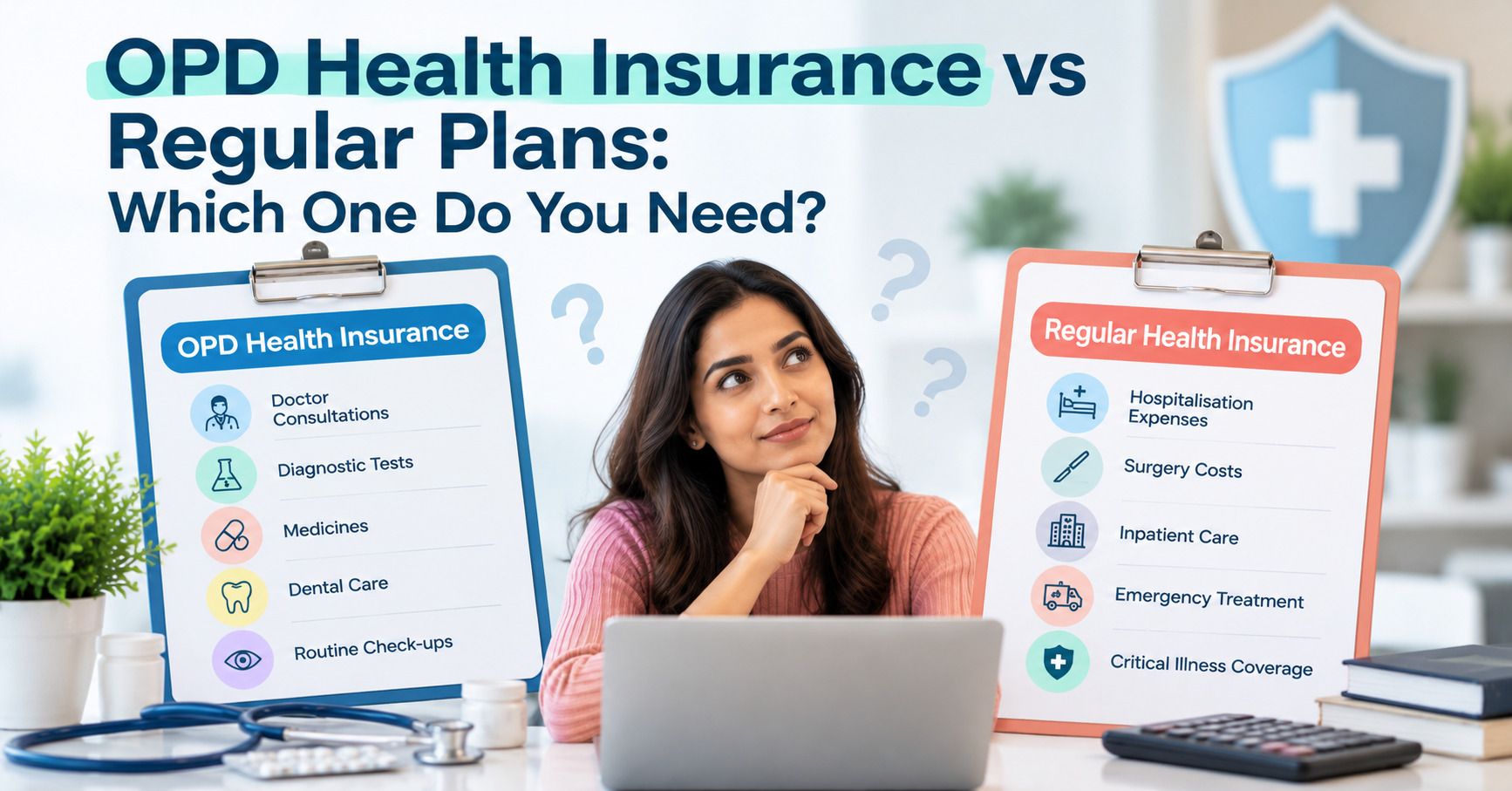
| Aspect | OPD Cover | Hospitalisation (IPD) Cover |
|---|---|---|
| Admission needed? | No | Yes, typically 24+ hours |
| Typical expenses | Consultations, tests, medicines, minor procedures | Surgery, room rent, ICU, major treatment |
| Claim frequency | High, used several times a year | Low, used occasionally |
| Sub-limits | Usually annual caps (e.g., ₹5,000–₹25,000) | Usually the full sum insured |
Read more about this in our guide on OPD vs IPD.
Why This 'Small' Cover Actually Matters a Lot
Someone may have convinced you of OPD cover as a "nice-to-have" rather than a necessity, but the numbers say otherwise.
According to the Ministry of Health and Family Welfare's National Health Accounts Estimates, out-of-pocket expenditure (the money Indian households pay directly for healthcare, from their own savings) stood at 43.4% of the country's total health expenditure in 2022-23. Although the figure has improved from 48.8% back in 2017-18, it still represents more than a third of all healthcare spending coming straight out of people's pockets.
Healthcare costs in India are rising well above general inflation. Aon's 2026 Global Medical Trend Rates Report projects that medical costs in India will rise by 11.5% in 2026 alone, ahead of the Asia-Pacific average of 11.3% and nearly double the general price inflation. Independent actuarial research published in The Actuary India by Milliman also puts India's medical trend at roughly 12–13% for 2024–25, more than three times the general inflation rate.
What this means practically: the small, recurring outpatient expenses like a specialist visit here, a diagnostic panel there, add up faster every year. So, a single family managing a chronic condition like diabetes or thyroid, or simply raising young children who need frequent paediatrician visits, can easily spend tens of thousands of rupees annually on OPD expenses alone. All of it currently comes out of pocket if their policy doesn't include OPD cover.
When you're comparing your first health insurance policy, look for one with OPD cover.
What Does OPD Cover Insurance Typically Include?
Coverage varies from insurer to insurer, so always read the policy wording, but most plans in the Indian market include a combination of the following:
- Doctor consultations: general physicians as well as specialists (dermatologist, ENT, orthopaedist, gynaecologist, and so on)
- Diagnostic tests: pathology, radiology, and imaging such as blood work, X-rays, and scans
- Pharmacy bills: prescribed medicines bought for outpatient treatment
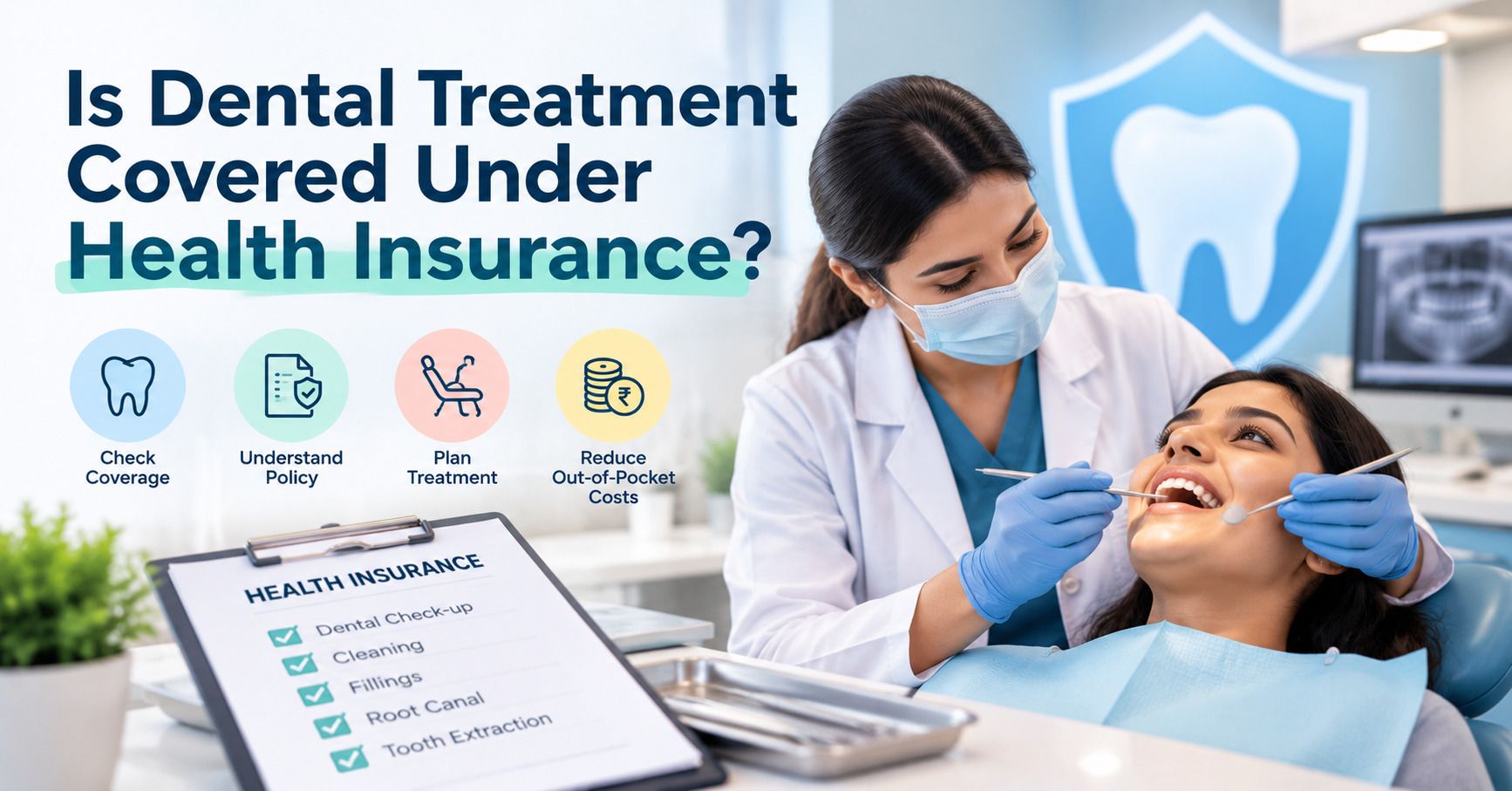
- Dental treatment: basic procedures like fillings or extractions, often with sub-limits
- Physiotherapy: sessions prescribed for injury or post-treatment recovery
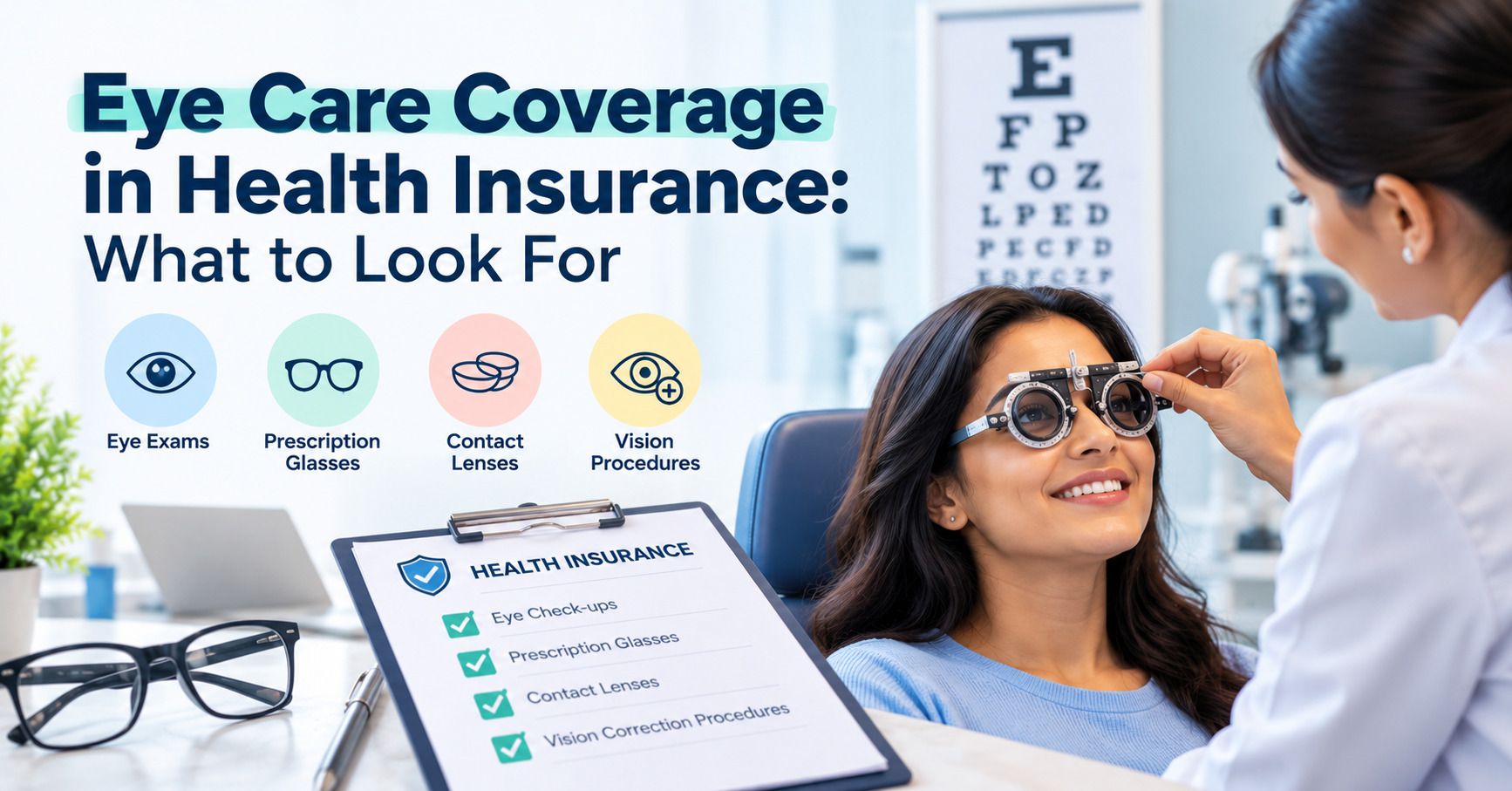
- Vision and hearing aids: eye check-ups, spectacles, or hearing devices in some plans
- Mental health consultations: psychiatric and therapy sessions, which insurers are required to cover on par with physical illness under the Mental Healthcare Act, 2017
OPD cover usually has an annual sub-limit (a fixed rupee amount you can claim per year). It may also cap how much you can spend per consultation or test. Always check these numbers before you buy; they matter far more than the headline sum insured.
How Do You Claim OPD Expenses?
Depending on your insurer and plan, OPD claims typically work in one of two ways:
- Reimbursement claims: you pay the doctor or pharmacy directly, keep the bills and prescription, and submit them through the insurer's app or portal for reimbursement.
- Cashless OPD: increasingly offered at network clinics and diagnostic centres, where the insurer settles the bill directly, and you pay nothing upfront.
On the regulatory side, the IRDAI Master Circular on Health Insurance Business, dated 29 May 2024, requires insurers to decide on cashless requests within one hour and settle reimbursement claims within 30 days, with interest payable to the policyholder for any delay beyond that period.
Bonus: Tax Benefits on OPD Cover Under Section 80D
OPD-inclusive health insurance is not just a health decision; it’s also a smart tax-planning one. Any premium you pay for health insurance, including plans bundled with OPD cover, is eligible for deduction under Section 80D of the Income Tax Act, 1961. As per the Income Tax Department, individuals below 60 can claim up to ₹25,000 for premiums paid for self, spouse, and dependent children, plus an additional ₹25,000 (₹50,000 if the parents are senior citizens) for premiums paid on behalf of parents.
How to Choose the Best Medical Insurance With OPD Cover
Not all OPD plans are created equal. Use this checklist to compare options:
- Check the annual OPD sub-limit and whether it resets every policy year.
- Look at per-consultation or per-test caps; a high overall limit is meaningless if each visit is capped too low.
- Confirm what's actually included since dental, physiotherapy, and mental health cover differ a lot between insurers.
- Check the claims process: cashless network availability, app-based filing, and turnaround time.
- Watch for waiting periods. Some benefits, like dental or maternity-linked OPD, may kick in only after a waiting period.
- Compare the premium against the sub-limit; a slightly higher premium is often worth it if the OPD limit is higher.
Why Buy Your OPD Cover Plan Through Prime.care
We started Prime.care, because too many people were buying their first wellness plan the way you'd buy anything under pressure, just based on price, and hoping for the best. OPD cover is the detail that gets lost in that process. We keep our policies simple and transparent.
Every OPD cover insurance plan listed on Prime.care comes with clearly stated sub-limits, inclusions, and exclusions upfront, so you know exactly what you're signing up for. Our team also helps you compare insurance with OPD cover against your family's actual usage pattern. Get in touch with us!
Frequently Asked Questions
1. Is OPD cover the same as day care treatment?
No. Day care treatment refers to procedures (like cataract surgery or chemotherapy) that need a hospital's medical infrastructure but not an overnight stay, and these are usually covered under your regular hospitalisation (IPD) sum insured. OPD cover, on the other hand, is for routine consultations, tests, and medicines that don't need hospital infrastructure.
2. Does every health insurance policy in India include OPD cover?
No. Many standard, budget-friendly health insurance policies cover only hospitalisation. OPD cover is either built into specific comprehensive plans or offered as an optional add-on/rider. Hence, you need to check for it or opt in actively.
3. Can I claim OPD expenses without any hospital visit?
Yes, that's the entire point of OPD cover. You can claim for a clinic consultation, a diagnostic test at a lab, or medicines bought on prescription, without ever being admitted to a hospital.
4. Is there a waiting period for OPD cover?
It depends on the insurer and the specific benefit. Basic consultations are often available from day one, while certain benefits like dental treatment or maternity-linked OPD may carry a waiting period. Always check the policy wording for exact timelines.
5. Does OPD cover help me save tax?
The premium you pay for a health insurance policy that includes OPD cover qualifies for deduction under Section 80D of the Income Tax Act, subject to the applicable limits based on your age and your parents' age.