Few weeks back, someone we know called in rather upset. She'd just paid ₹38,000 for a root canal and crown, filed the claim exactly like she had for every hospital visit before, and got a flat rejection. "But I have health insurance," she said. "Why doesn't it cover my teeth?" Honestly, we hear this a lot. And it's not her fault for assuming otherwise. Most of us buy a health policy thinking it's a blanket safety net for anything medical. Teeth included.
Here's a scene you might recognise too: you bite into a laddoo at a wedding and feel a sharp, blinding pain shoot through your jaw. Three days and one dentist visit later, you're staring at a bill for a root canal and crown that costs more than your monthly grocery budget. Your first instinct is probably, "My health insurance will cover this." Unfortunately, more often than not, it won't.
Dental care sits in its own little bubble in the Indian insurance market. It's not that insurers are being unfair; it's how the entire system has been developed for decades, and only recently has that started to change. So let's actually get into it: is dental treatment covered under health insurance, what's covered and what isn't, and how you can actually claim insurance for dental treatment when it does apply.
Does Health Insurance Cover Dental Treatment?
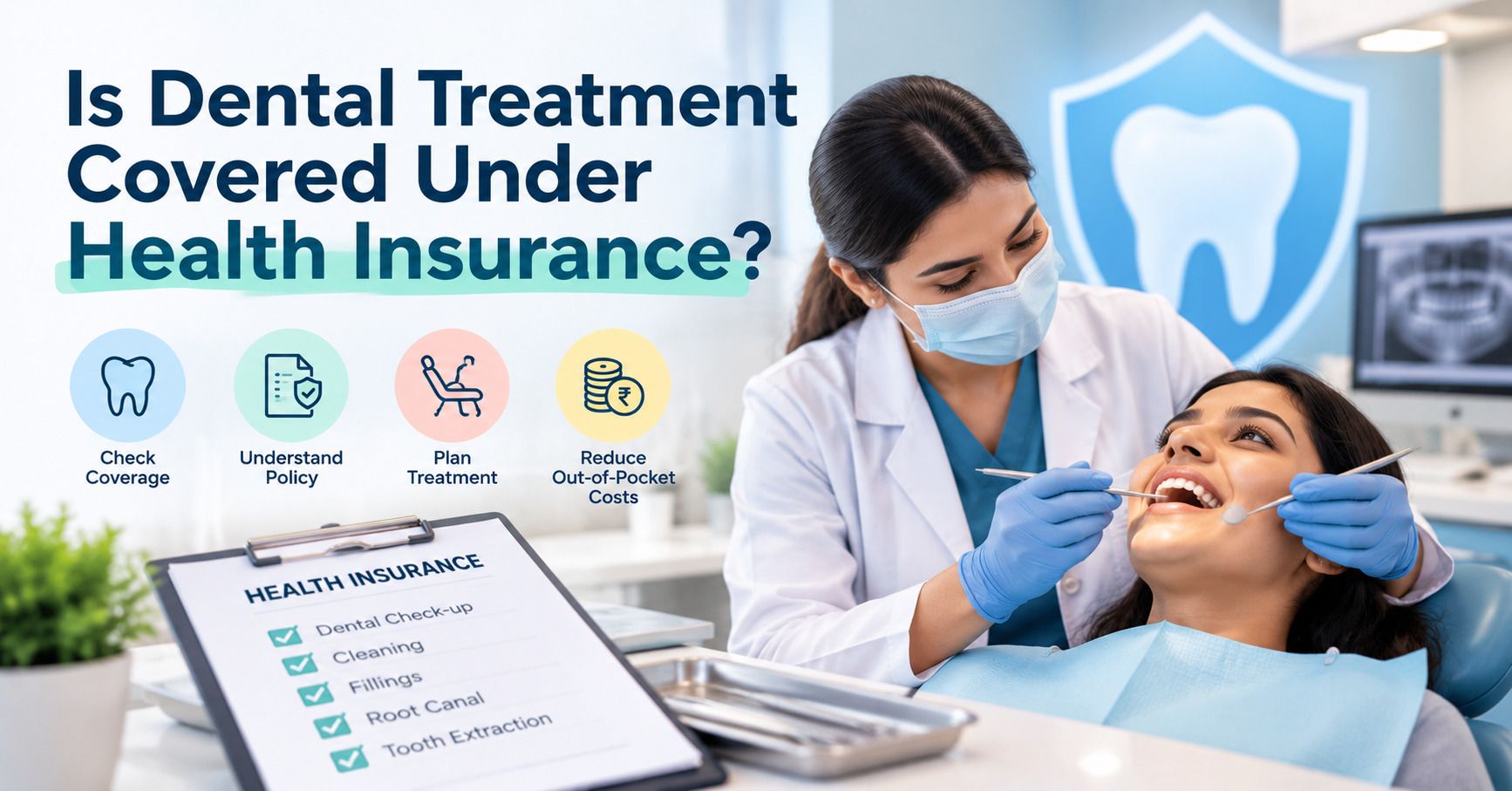
Dental health is one of the most overlooked areas of personal expenses in India, mostly because people assume their health insurance policy has their back. It often doesn't, at least not fully. Procedures like fillings, root canals, extractions, scaling, braces, and dentures are typically listed as permanent exclusions, unless one of these two conditions is met:
- Accident-related: Your teeth or jaw were damaged in a fall, a road mishap, or anything that counts as accidental trauma.
- Hospitalisation-linked: Treatment requires hospitalisation as part of a larger surgical procedure (for example, an impacted wisdom tooth causing a severe infection or jaw surgery following a tumour).
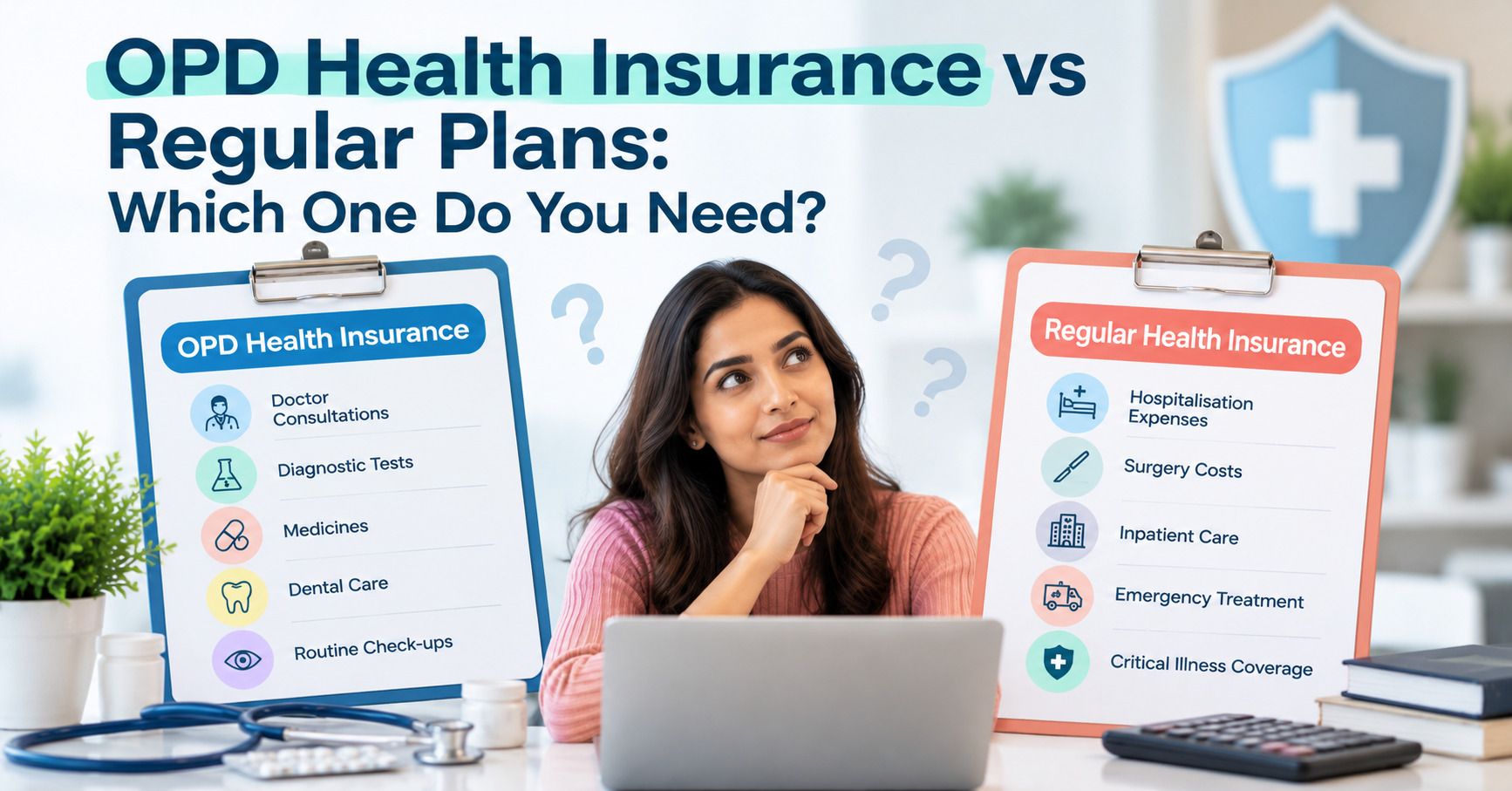
Outside of these two situations, dental care is usually treated as a cosmetic or “lifestyle” expense by insurers, which is why it sits outside your base health insurance policy's payable list. If you want genuine dental protection, you typically need either a dedicated dental insurance add-on, an OPD (outpatient) rider, or a standalone dental plan.
What Does IRDAI Actually Say About Dental Coverage?
Dental coverage in insurance isn’t an insurer trick; it comes straight from the regulator. Back in 2019, the Insurance Regulatory and Development Authority of India (IRDAI) issued its Guidelines on Standardisation of Exclusions in Health Insurance Contracts. It places dental treatment, including dentures, under standard exclusions, with the same two carve-outs we mentioned earlier: accident-related trauma or treatment requiring hospitalisation.
What this circular actually did, though, was bring order to what used to be an inconsistent confusion of policy terms that varied from insurer to insurer. At least now, you know exactly where you stand, instead of hunting through fifty pages of fine print trying to figure out your insurer's particular stance on molars.
Over the years, IRDAI has pushed insurers toward more transparency in general, from faster cashless approvals to clearer disclosure of premium slabs and a mandatory one-page Customer Information Sheet that spells out your policy's inclusions and exclusions in plain language. Dental treatment, however, has largely stayed a grey area that policyholders discover the hard way, usually while filing a claim.
Why Insurers Exclude Routine Dental Treatment
It isn't arbitrary; these are the reasons insurers keep dental out of the base policy:
- High-frequency, low-severity claims: Dental issues are common and recurring (cavities, cleanings, sensitivity), which would push up claim frequency and premiums for everyone if insurers bundled them by default.
- Cosmetic overlap: Many dental procedures, including whitening, veneers, and aligners blur the line between medical necessity and aesthetic choice, making underwriting difficult.
- Low individual cost, high volume: Unlike a cardiac surgery or cancer treatment, a single dental procedure rarely bankrupts a household. So insurers see it as a manageable out-of-pocket expense rather than a “sudden risk” that insurance is designed to protect against.
Does Dental Insurance Cover Implants, Braces, and Wisdom Teeth Removal?
Dental implants are expensive, often the costliest dental procedure someone will pay for. Standard health insurance treats them as elective, meaning they're excluded unless the tooth loss came from an accident. If implants are on your radar (maybe your dentist has already flagged it), the only real path to coverage is a dedicated dental add-on or a standalone dental coverage plan that specifically lists implants, usually with a cap on how much it'll pay per tooth or per year.
Wisdom tooth removal is genuinely situational. If it’s a routine, in-clinic extraction, it’s not covered. But if the tooth is impacted and needs surgical removal with hospitalisation, which does happen when there's infection or nerve involvement, insurers often process it as a day-care or hospitalisation procedure. Ask your dentist to document the medical necessity clearly, because that documentation usually makes or breaks the claim.
Braces and orthodontic treatment. Cosmetic straightening is excluded across nearly every insurer. The exception is when orthodontic work is medically necessary, say, correcting a congenital jaw deformity or repairing damage from an accident. Even dental-inclusive riders tend to cap orthodontic payouts fairly low, so if this is a priority for you or your child, read that sub-limit carefully before you buy.
When Is Dental Treatment Covered Under Health Insurance?
Dental treatment is typically payable under your health insurance when:
- It follows an accident: If you're in a car or bike accident and suffer facial or jaw trauma requiring dental surgery, most insurers will treat this as accidental injury cover, not a dental exclusion.
- It requires in-patient hospitalisation: If a dental condition (like an impacted wisdom tooth causing severe infection, or a jaw tumour) needs surgical removal under general anaesthesia with a hospital stay, some insurers may cover it under their hospitalisation benefit. However, it’s subject to policy wording.
- You hold a dental or OPD rider/add-on: Several insurers now offer optional riders that specifically cover consultations, X-rays, fillings, and even a portion of major procedures like root canals or implants, usually up to an annual sub-limit.
- You're covered under a corporate/group health plan: Many employer-sponsored group policies include limited OPD dental benefits as part of their wellness package — check your HR policy document.
If you're unsure whether your current plan includes any of these, the smartest first step is to actually read your Customer Information Sheet (CIS), a one-page IRDAI-mandated summary that lists your policy's inclusions, exclusions, and sub-limits in easy terms.
The Bigger Shift Happening in Indian Health Insurance
OPD (outpatient) cover, the category that dental care usually falls under, has quietly become one of the fastest-growing parts of health insurance in India. According to an industry analysis covered by Business Standard, OPD adoption jumped from just 5% of health policies bought in FY23 to 22% in FY26, a roughly four-and-a-half-fold increase in three years. Doctor consultations, diagnostics, pharmacy bills, and yes, dental treatment, are now among the most-used parts of these plans, with policyholders making three to four OPD claims a year on average.
We're not surprised. Dental care is one of those things everyone eventually needs, but nobody plans for. And oral health issues in India aren't rare. According to a nationwide meta-analysis published in the Journal of Clinical and Diagnostic Research that pooled decades of epidemiological studies and National Oral Health Survey data, dental caries (tooth decay) affects roughly 49% of 12-year-olds, climbing to 78% of adults aged 35–44 and a striking 84% among people aged 65–74. Somewhere between those numbers is basically everyone you know.
What Does Dental Treatment Actually Cost in India?
Understanding the real cost helps you decide whether a rider is worth adding. Based on aggregated data from Indian dental cost trackers, here's a broad range you can expect across metro cities:
| Treatment | Typical Cost Range (₹) |
| Consultation | 250 – 1,000 |
| Scaling & Cleaning | 600 – 2,500 |
| Root Canal (per tooth) | 2,000 – 11,000 |
| Crown (post root canal) | 3,000 – 14,000 |
| Braces (full treatment) | 20,000 – 65,000 |
| Single Dental Implant (with crown) | 24,700 – 70,000 |
Now imagine a family where one kid needs braces and a parent needs two implants in the same year. Braces can run ₹20,000–₹65,000, and two implants add another ₹49,400–₹1,40,000. So that family could be looking at anywhere between roughly ₹70,000 and just over ₹2,00,000, entirely out of pocket, if there's no dental-specific cover in place. That's the real financial exposure we're talking about here — not a hypothetical.
How to Get Dental Coverage in India: Your Options
It depends on your age, your family's dental history, and honestly, your budget.
- Add an OPD/dental rider to your existing individual or family floater health policy, if your insurer offers one for an extra premium. It typically covers consultations, X-rays, fillings, and a portion of bigger procedures, up to an annual limit.
- Buy a standalone dental insurance plan, a growing category post-IRDAI's push to treat dental care as a genuine health need rather than a cosmetic add-on. Worth a look if dental work is a recurring cost for your family.
- Check your employer's group health policy for bundled dental/OPD benefits. Many corporate policies quietly include this; pull out your policy document or ask HR directly.
- Maintain a health top-up or super top-up for larger dental-related hospitalisations that exceed your base sum insured.
- Look into a dental discount or wellness membership plan. Unlike insurance, these aren't claim-based; they're prepaid membership programs that give you pre-negotiated discounted rates (often 20–40% off) at a network of partner dental clinics. No waiting period, no claim paperwork, and they won't reimburse you the way insurance does. But for routine, recurring visits that include cleanings, check-ups, and small fillings, they can work out cheaper and with far less hassle than filing a claim for a small amount.
Where Prime Care Fits Into This
Here’s exactly where Prime.care fits in: our OPD plans cover cashless dental treatment up to ₹2,000 a year, including consultations, cleanings, and root canals, with no waiting period before you can claim, no decoding fifty pages of exclusions. Explore Prime Care's OPD health plans, compare what's actually included, and get covered in under 2 minutes! We protect both your smile and your savings.
A quick note: the options above, including dental discount and membership plans, are independent of Prime.care’s own offering. Prime.care provides OPD health plans. Always check the exact coverage, sub-limits, and waiting periods in your policy wording before signing up, as they vary by insurer and plan.
Frequently Asked Questions
1. Does health insurance cover dental treatment in India?
Generally, no. Routine dental treatment is a standard permanent exclusion under IRDAI's guidelines, unless it results from an accident or requires hospitalisation as part of a larger surgical procedure.
2. Is dental treatment covered under health insurance if caused by an accident?
Yes. Dental injuries sustained in an accident are typically treated as accidental injury claims and are usually payable, subject to your policy's terms and documentation.
3. Does dental insurance cover implants in India?
Only if you specifically hold a dental add-on, rider, or standalone dental plan that lists implants as covered, usually up to a fixed sub-limit. Standard health insurance almost never covers elective implants.
4. Is wisdom tooth removal covered by insurance?
Usually, a simple outpatient extraction is excluded. However, surgical removal of an impacted wisdom tooth requiring hospitalisation may be covered as a day-care or hospitalisation procedure, depending on your insurer's policy wording.
5. How can I get dental coverage if my health insurance doesn't include it?
You can add an OPD/dental rider to your existing policy, purchase a standalone dental insurance plan, check for bundled benefits in a corporate group policy.